Electronic Logging Devices: Understanding Compliance and Accurate Recordkeeping
Electronic Logging Devices automate HOS records, but accuracy still depends on daily practice. A closer look at ELD compliance and the common recordkeeping errors that surface during review.
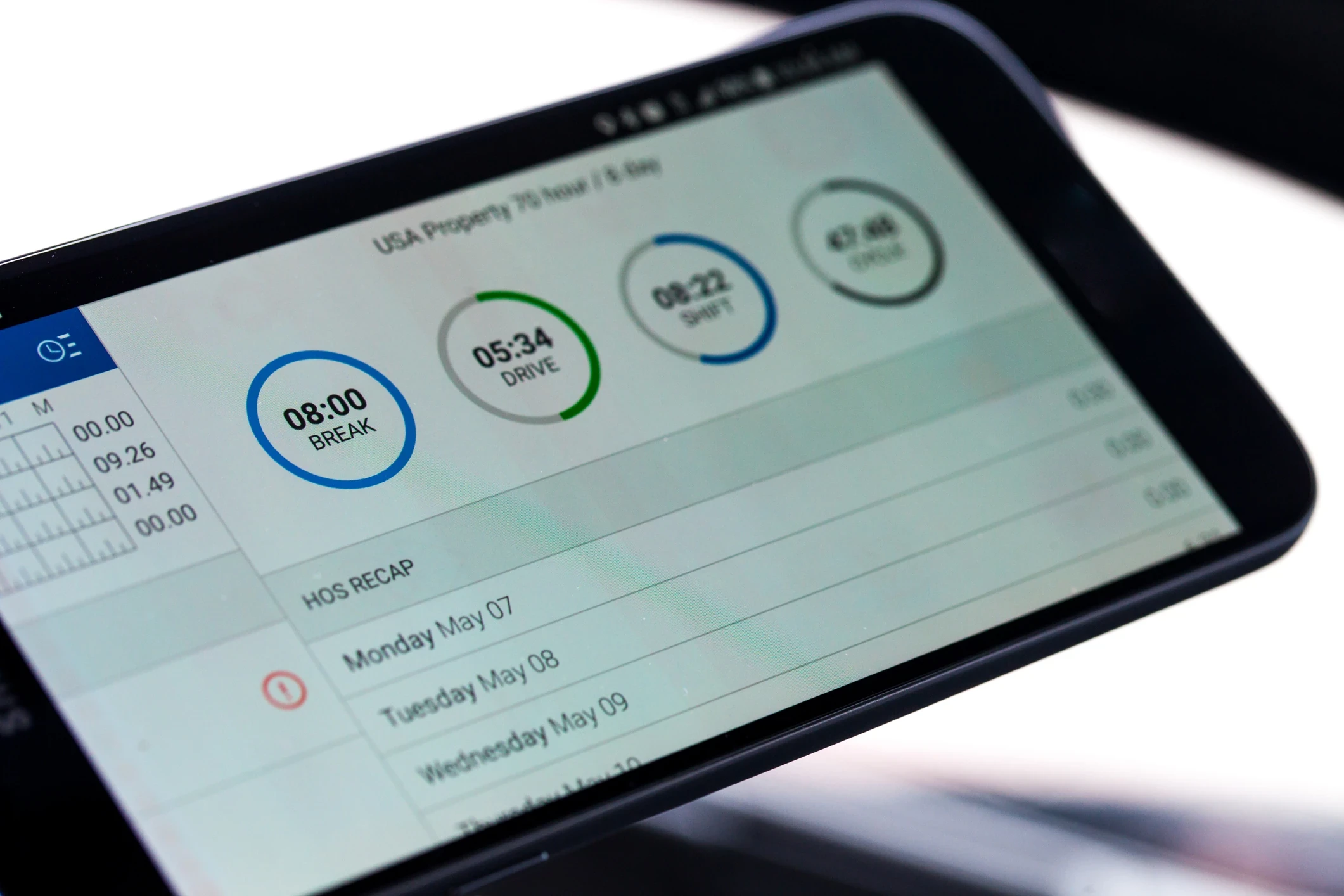
An Electronic Logging Device (ELD) automatically records a driver's Hours of Service (HOS). For most commercial carriers, it has become the primary tool for documenting compliance with federal HOS requirements.
An ELD, however, is only part of the compliance process. The quality of the record still depends on accurate duty status entries, supporting documentation, and regular review. Even with automated tracking, recordkeeping remains an important part of maintaining compliance.
What Is an Electronic Logging Device?
An ELD is a device that connects to a commercial vehicle's engine and records driving time on its own. It captures data directly from the engine—when the truck is moving, when it stops, how long it runs.
Before the mandate, drivers kept paper logs by hand, and paper records relied entirely on manual entries, making them more susceptible to errors or later revisions. Because an ELD pulls straight from engine data, the resulting record provides a more consistent and verifiable account of vehicle activity. The ELD is one part of a wider shift toward connected fleet systems, a trend explored in The Role of Technology in Modernizing Trucking Operations.
Who Is Required to Use an ELD?
The Federal Motor Carrier Safety Administration (FMCSA) mandate applies ELD to most drivers who are required to keep records of duty status. FMCSA lists several exceptions, including:
Short-haul drivers who qualify under the 150 air-mile exception and keep simple time records instead.
Pre-2000 engines—vehicles with an engine model year before 2000, which often lack the connection an ELD needs. (The exception follows the engine year, not the truck's registration year.)
Driveaway-towaway operations, where the vehicle being driven is itself the item being delivered.
Limited-log drivers who keep records of duty status on 8 days or fewer in any 30-day period.
Although these operations may qualify for an exemption from the ELD requirement, they are not exempt from Hours of Service regulations themselves. Drivers must comply with the applicable HOS limits and maintain the required records using the appropriate method. Full detail on device requirements and exceptions is available on FMCSA's Electronic Logging Devices page.
What Information Does an ELD Record?
An ELD automatically captures key operational data while allowing drivers to add information required to complete the record of duty status.
Driving status—whether the vehicle is being driven.
Engine hours—how long the engine runs.
Mileage—distance traveled.
Vehicle movement—when the truck starts and stops.
Location—general location at each status change.
Duty status changes—shifts between off duty, sleeper berth, on duty not driving, and driving.
Edits and annotations—corrections and the notes that explain them.
Common Recordkeeping Errors
The most common ELD recordkeeping errors include incorrect duty status selection, missing edit annotations, unassigned driving time, failure to certify logs, and improper personal conveyance entries. Most result from misunderstandings, inconsistent processes, or simple administrative oversights rather than intentional misconduct
Incorrect Duty Status
The wrong status is selected. For example, on-duty work logged as off duty, or driving time recorded as something else. Because status decides how hours count, the wrong choice may result in an Hours of Service violation even when the total hours worked remain within the applicable limits.
Missing or Incomplete Annotations
An ELD allows edits in certain cases, but every edit needs a clear note explaining why. A change without a proper annotation leaves the reason for the change undocumented, which may create questions during a roadside inspection or compliance review.
Unassigned Driving Time
When a truck moves without a driver logged in, the ELD still records the movement as unassigned driving time. That time has to be reviewed and assigned to the right driver. If not reviewed and assigned appropriately, these records may create gaps in the carrier's documentation.
Failure to Certify Records
A driver is expected to review and certify the log for accuracy. When certification is skipped, the record is left unconfirmed—a common recordkeeping issue during compliance review.
Improper Personal Conveyance Entries
Personal conveyance is a real, allowed status for genuine personal use of the vehicle. Using it to extend what is really driving time may result in an inaccurate record of duty status and potential compliance concerns. The ELD still records the movement either way.
ELD Records During Roadside Inspections
During an inspection, an officer may review a driver's ELD records for the current period. The device is built to transfer data to the inspector—typically by an electronic method, with a display as backup. Supporting documents, such as bills of lading or fuel receipts, may also be reviewed alongside the electronic log to help verify that the recorded duty status aligns with the trip.
Accurate Recordkeeping as Part of Compliance
Accurate recordkeeping is a core element of ELD compliance. While the device captures much of the required information automatically, maintaining complete and consistent records still depends on day-to-day operational processes. Typical compliance practices include:
regular log certification
keeping supporting documentation
timely correction of editable records, with proper notes
internal compliance reviews.
These practices do not change the hours worked or driven. Instead, they help ensure that the electronic record accurately reflects daily operations and supports regulatory compliance.
Looking Ahead: Compliance Beyond Regulations
Beyond regulatory compliance, ELD and telematics data may also contribute to a broader picture of operational performance. Depending on the circumstances of a claim, insurers may consider this information alongside other safety and operational data. Explore a practical example of using telematics and camera data to help resolve disputed trucking claims in How Telematics and Cameras Help Resolve Fraudulent Claims in Trucking.
Conclusion
Electronic Logging Devices have become the standard method for documenting Hours of Service compliance across much of the trucking industry.
At the same time, accurate duty status records, supporting documentation, and consistent review remain essential parts of an effective compliance program. The next article examines how Hours of Service compliance may fit into the broader insurance risk-management picture.
STAR Mutual RRG is a risk retention group that offers commercial auto liability insurance for a wide range of transportation operations—from owner-operators to large fleets across for-hire trucking, last-mile delivery, specialized hauling, and more.
An Electronic Logging Device (ELD) automatically records a driver's Hours of Service (HOS). For most commercial carriers, it has become the primary tool for documenting compliance with federal HOS requirements.
An ELD, however, is only part of the compliance process. The quality of the record still depends on accurate duty status entries, supporting documentation, and regular review. Even with automated tracking, recordkeeping remains an important part of maintaining compliance.
What Is an Electronic Logging Device?
An ELD is a device that connects to a commercial vehicle's engine and records driving time on its own. It captures data directly from the engine—when the truck is moving, when it stops, how long it runs.
Before the mandate, drivers kept paper logs by hand, and paper records relied entirely on manual entries, making them more susceptible to errors or later revisions. Because an ELD pulls straight from engine data, the resulting record provides a more consistent and verifiable account of vehicle activity. The ELD is one part of a wider shift toward connected fleet systems, a trend explored in The Role of Technology in Modernizing Trucking Operations.
Who Is Required to Use an ELD?
The Federal Motor Carrier Safety Administration (FMCSA) mandate applies ELD to most drivers who are required to keep records of duty status. FMCSA lists several exceptions, including:
Short-haul drivers who qualify under the 150 air-mile exception and keep simple time records instead.
Pre-2000 engines—vehicles with an engine model year before 2000, which often lack the connection an ELD needs. (The exception follows the engine year, not the truck's registration year.)
Driveaway-towaway operations, where the vehicle being driven is itself the item being delivered.
Limited-log drivers who keep records of duty status on 8 days or fewer in any 30-day period.
Although these operations may qualify for an exemption from the ELD requirement, they are not exempt from Hours of Service regulations themselves. Drivers must comply with the applicable HOS limits and maintain the required records using the appropriate method. Full detail on device requirements and exceptions is available on FMCSA's Electronic Logging Devices page.
What Information Does an ELD Record?
An ELD automatically captures key operational data while allowing drivers to add information required to complete the record of duty status.
Driving status—whether the vehicle is being driven.
Engine hours—how long the engine runs.
Mileage—distance traveled.
Vehicle movement—when the truck starts and stops.
Location—general location at each status change.
Duty status changes—shifts between off duty, sleeper berth, on duty not driving, and driving.
Edits and annotations—corrections and the notes that explain them.
Common Recordkeeping Errors
The most common ELD recordkeeping errors include incorrect duty status selection, missing edit annotations, unassigned driving time, failure to certify logs, and improper personal conveyance entries. Most result from misunderstandings, inconsistent processes, or simple administrative oversights rather than intentional misconduct
Incorrect Duty Status
The wrong status is selected. For example, on-duty work logged as off duty, or driving time recorded as something else. Because status decides how hours count, the wrong choice may result in an Hours of Service violation even when the total hours worked remain within the applicable limits.
Missing or Incomplete Annotations
An ELD allows edits in certain cases, but every edit needs a clear note explaining why. A change without a proper annotation leaves the reason for the change undocumented, which may create questions during a roadside inspection or compliance review.
Unassigned Driving Time
When a truck moves without a driver logged in, the ELD still records the movement as unassigned driving time. That time has to be reviewed and assigned to the right driver. If not reviewed and assigned appropriately, these records may create gaps in the carrier's documentation.
Failure to Certify Records
A driver is expected to review and certify the log for accuracy. When certification is skipped, the record is left unconfirmed—a common recordkeeping issue during compliance review.
Improper Personal Conveyance Entries
Personal conveyance is a real, allowed status for genuine personal use of the vehicle. Using it to extend what is really driving time may result in an inaccurate record of duty status and potential compliance concerns. The ELD still records the movement either way.
ELD Records During Roadside Inspections
During an inspection, an officer may review a driver's ELD records for the current period. The device is built to transfer data to the inspector—typically by an electronic method, with a display as backup. Supporting documents, such as bills of lading or fuel receipts, may also be reviewed alongside the electronic log to help verify that the recorded duty status aligns with the trip.
Accurate Recordkeeping as Part of Compliance
Accurate recordkeeping is a core element of ELD compliance. While the device captures much of the required information automatically, maintaining complete and consistent records still depends on day-to-day operational processes. Typical compliance practices include:
regular log certification
keeping supporting documentation
timely correction of editable records, with proper notes
internal compliance reviews.
These practices do not change the hours worked or driven. Instead, they help ensure that the electronic record accurately reflects daily operations and supports regulatory compliance.
Looking Ahead: Compliance Beyond Regulations
Beyond regulatory compliance, ELD and telematics data may also contribute to a broader picture of operational performance. Depending on the circumstances of a claim, insurers may consider this information alongside other safety and operational data. Explore a practical example of using telematics and camera data to help resolve disputed trucking claims in How Telematics and Cameras Help Resolve Fraudulent Claims in Trucking.
Conclusion
Electronic Logging Devices have become the standard method for documenting Hours of Service compliance across much of the trucking industry.
At the same time, accurate duty status records, supporting documentation, and consistent review remain essential parts of an effective compliance program. The next article examines how Hours of Service compliance may fit into the broader insurance risk-management picture.
STAR Mutual RRG is a risk retention group that offers commercial auto liability insurance for a wide range of transportation operations—from owner-operators to large fleets across for-hire trucking, last-mile delivery, specialized hauling, and more.
Contents
Stay up-to-date
Related Post

Aug 24, 2026
Become a STAR Agent
Become a STAR Agent
Get access to unparalleled technology-based service to quote and bind your clients in minutes.
Get appointed
Thousands of agents across the United States | Same-day quotes, ready to bind

STAR Mutual Risk Retention Group offers commercial auto liability insurance to the members of Reliable Transportation Association (“RTA”), looking for accessible and reliable coverage.
Contact
855-5MY-STAR (855-569-7827)
STAR Mutual RRG
PO Box 51414, Philadelphia
PA 19115
General inquiries:
Agent inquiries:
Claim inquiries:
The information presented on this website is for general informational purposes only and does not constitute legal, regulatory, or business advice. Readers are encouraged to consult with qualified legal or insurance professionals regarding questions specific to their circumstances.
The content is provided for general informational purposes only and does not constitute an offer to sell, or a solicitation of an offer to buy, insurance in any jurisdiction where STAR Mutual RRG is not licensed or registered. Any description of coverage is general and subject to the terms, conditions, and exclusions of the actual policy.
STAR Mutual Risk Retention Group offers commercial auto liability insurance to the members of Reliable Transportation Association (“RTA”), looking for accessible and reliable coverage.
Contact
855-5MY-STAR (855-569-7827)
STAR Mutual RRG
PO Box 51414, Philadelphia
PA 19115
General inquiries:
Agent inquiries:
Claim inquiries:
The information presented on this website is for general informational purposes only and does not constitute legal, regulatory, or business advice. Readers are encouraged to consult with qualified legal or insurance professionals regarding questions specific to their circumstances.
The content is provided for general informational purposes only and does not constitute an offer to sell, or a solicitation of an offer to buy, insurance in any jurisdiction where STAR Mutual RRG is not licensed or registered. Any description of coverage is general and subject to the terms, conditions, and exclusions of the actual policy.
STAR Mutual Risk Retention Group offers commercial auto liability insurance to the members of Reliable Transportation Association (“RTA”), looking for accessible and reliable coverage.
Contact
855-5MY-STAR (855-569-7827)
STAR Mutual RRG
PO Box 51414, Philadelphia
PA 19115
General inquiries:
Agent inquiries:
Claim inquiries:
The information presented on this website is for general informational purposes only and does not constitute legal, regulatory, or business advice. Readers are encouraged to consult with qualified legal or insurance professionals regarding questions specific to their circumstances.
The content is provided for general informational purposes only and does not constitute an offer to sell, or a solicitation of an offer to buy, insurance in any jurisdiction where STAR Mutual RRG is not licensed or registered. Any description of coverage is general and subject to the terms, conditions, and exclusions of the actual policy.
© 2026 - STAR Mutual RRG. All rights reserved.