How Telematics and Cameras Help Resolve Fraudulent Claims in Trucking
Misidentified claims can affect even well-managed trucking fleets. See how ELD data, GPS records, and camera footage support accurate and efficient claim resolution.

Fraudulent claims and misidentified incidents can create real exposure for U.S. trucking operations. Even well-managed fleets with strong safety records may receive claims tied to incidents in which their equipment was not involved.
Electronic Logging Devices (ELDs), GPS tracking, and onboard camera systems provide timestamped operational data on vehicle location, movement, and surrounding conditions. This information helps clarify what occurred and supports accurate claim resolution.
The sections below examine why misidentification happens, what documentation makes a difference, and how fleets can structure their operations to respond effectively when disputes arise.
Why Misidentified Trucking Claims Happen
In day-to-day trucking operations—especially across multiple states, dense traffic corridors, and high-volume freight lanes—vehicles are constantly interacting with passenger traffic under conditions where visibility, timing, and identification are not always precise.
In commercial trucking, vehicle misidentification can occur when incidents are reported with incomplete or inconsistent details, particularly in the following environments:
Multi-lane highway environments,
Urban congestion zones,
High-density freight corridors.
Common scenarios include:
A passenger vehicle reports a sideswipe but cannot clearly identify the correct unit from among multiple commercial vehicles,
A trailer number or carrier name is partially observed and later misreported,
A delayed police report is filled with incomplete or inconsistent equipment details,
A commercial vehicle is assumed to be involved due to proximity rather than verified identification.
These situations do not always involve intentional fraud, but they can still lead to incorrect claim attribution and unnecessary financial exposure for carriers who were not involved.
What Makes Disputed Trucking Claims Difficult to Resolve
Without supporting operational data, it can be difficult to clearly confirm whether a specific unit was involved. In disputed claims, the available information is often limited to:
Third-party statements from drivers or witnesses,
Police reports with partial or inconsistent equipment details,
General descriptions of vehicle color and size.
A scenario that frequently appears in commercial auto claims: a carrier receives a demand related to an alleged incident at a specific location and time window, while internal records place the equipment in a different state entirely. When that data is documented, timestamped, and preserved through the fleet’s telematics or vehicle data systems, it becomes the foundation for resolution. When it is not, the claim may remain open for weeks, consuming legal resources and potentially affecting loss history.
How ELD, GPS, and Camera Data Supports Claim Resolution
Operational data from ELDs and cameras can support faster clarification of disputed events, better alignment between reported incidents and actual fleet activity, and reduced time spent resolving inconsistencies in third-party accounts.
ELDs and Telematics: Verifying Truck Location and Movement
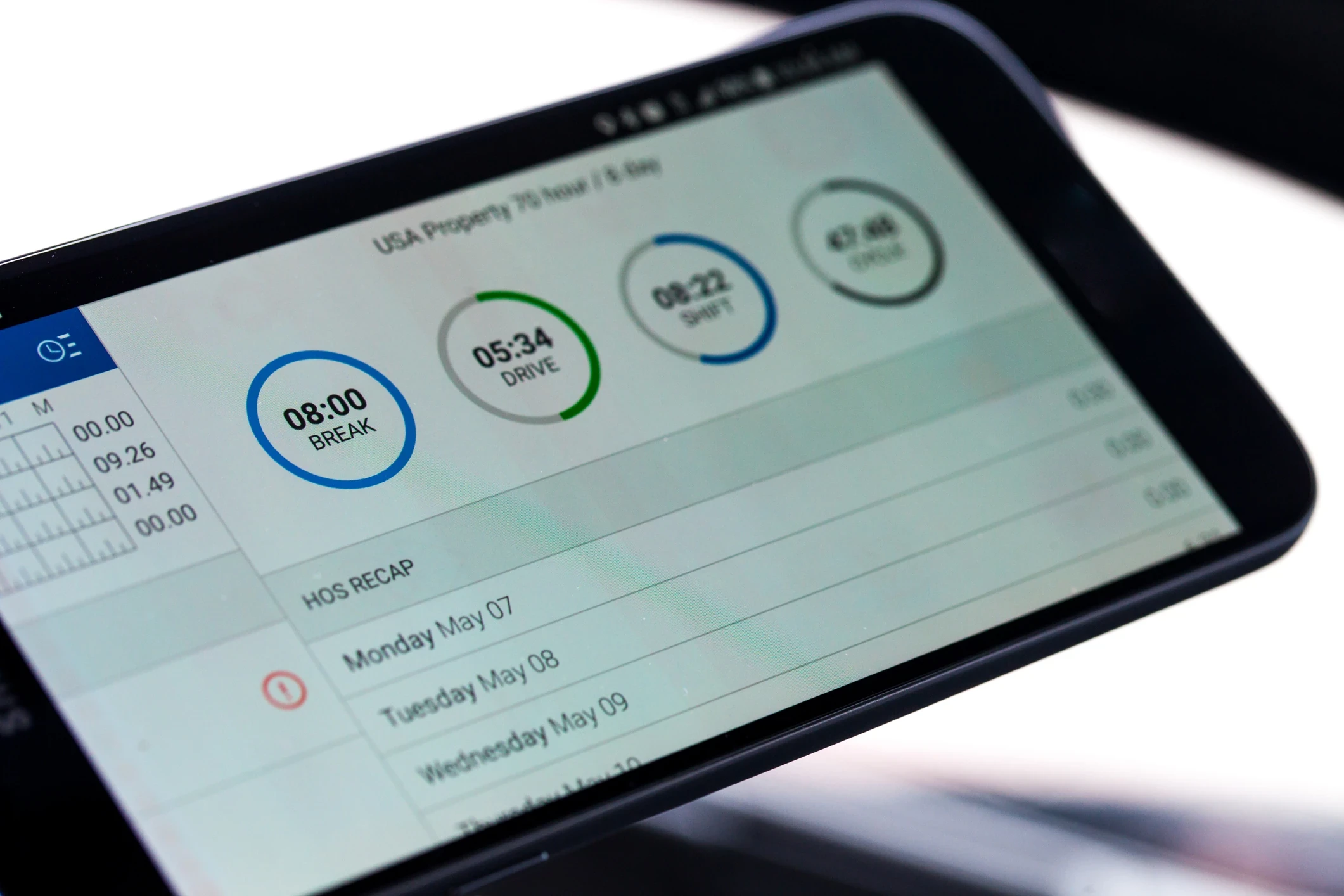
Under the FMCSA ELD rule, many drivers and motor carriers required to keep records of duty status must use ELDs that are self-certified by providers and registered with FMCSA.
These systems create verifiable records of:
Driver duty status and HOS-compliant timestamps,
Vehicle movement and route history by unit,
Geographic coordinates at specific points in time.
This data can confirm whether a truck or trailer was operating in the reported location, whether it was on a different route or in another region entirely, and whether driver logs are consistent with actual vehicle movement patterns.
Camera Systems: Providing Visual Context in Claims
Camera systems add visual context that location data alone cannot supply. Depending on configuration—forward-facing, side-mounted, or multi-angle—footage may:
Show lane position and the behavior of surrounding traffic at the time of an alleged incident,
Capture the sequence of events leading up to a reported contact or near-miss,
Document interactions with nearby vehicles in high-density proximity situations.
When footage is available and properly retained, it can meaningfully reduce ambiguity around how an event unfolded—and whether a specific unit was involved at all.
Best Practices for Using Telematics and Camera Data
Telematics and camera systems are most effective when supported by consistent operational practices. Fleets that maintain structured processes are typically better positioned to respond when claims arise.
Key practices include:
Maintaining organized data retention policies for telematics and video footage, with clear timelines for preservation when incidents are reported or suspected,
Promptly documenting incidents and unusual roadside situations in dispatch or safety logs at the time they occur,
Ensuring DOT numbers, unit numbers, license plates, and trailer identifiers are clearly visible, accurate, and current on all equipment,
Coordinating communication between drivers, dispatch, safety officers, and claims contacts from the moment an incident is reported,
In mixed-equipment fleets (owned units, leased equipment, and multiple trailers) maintaining clear internal tracking to reduce confusion when incidents are reported across units.
Building a Verifiable Operational Record in Trucking
For many carriers, ELDs and cameras are already part of compliance and safety programs. Their role extends beyond regulatory requirements by creating a transparent and verifiable operational record of fleet activity that can be accessed when disputes arise.
A structured approach may include:
DOT-compliant ELD implementation with accessible historical reporting by unit and driver,
GPS systems with searchable location history, retrievable by unit number and date range,
Camera configurations aligned with operational risk profile—urban delivery routes, multi-trailer operations, long-haul corridors,
Clear internal workflows for incident reporting, data access, and documentation retention that all relevant staff understand and follow.
For additional perspective on how technology supports modern fleet operations, see The Role of Technology in Modernizing Trucking Operations.
Conclusion: The Role of Data in Supporting Trucking Claim Clarity
In a transportation environment where incidents may be reported with incomplete or inconsistent information, reliable operational data plays an important role in claim resolution.
ELDs, GPS systems, and cameras do not eliminate claim risk, but they can support clarity when events are disputed and help align reported timelines and locations with actual fleet activity.
STAR Mutual RRG focuses on supporting carriers and operators with insurance programs built around real-world trucking operations, where consistent documentation and safety practices support long-term stability. Motor carriers who treat telematics and documentation as part of their operational infrastructure, not just a regulatory requirement, are better positioned to protect their records, their finances, and their long-term standing in the market.
Fraudulent claims and misidentified incidents can create real exposure for U.S. trucking operations. Even well-managed fleets with strong safety records may receive claims tied to incidents in which their equipment was not involved.
Electronic Logging Devices (ELDs), GPS tracking, and onboard camera systems provide timestamped operational data on vehicle location, movement, and surrounding conditions. This information helps clarify what occurred and supports accurate claim resolution.
The sections below examine why misidentification happens, what documentation makes a difference, and how fleets can structure their operations to respond effectively when disputes arise.
Why Misidentified Trucking Claims Happen
In day-to-day trucking operations—especially across multiple states, dense traffic corridors, and high-volume freight lanes—vehicles are constantly interacting with passenger traffic under conditions where visibility, timing, and identification are not always precise.
In commercial trucking, vehicle misidentification can occur when incidents are reported with incomplete or inconsistent details, particularly in the following environments:
Multi-lane highway environments,
Urban congestion zones,
High-density freight corridors.
Common scenarios include:
A passenger vehicle reports a sideswipe but cannot clearly identify the correct unit from among multiple commercial vehicles,
A trailer number or carrier name is partially observed and later misreported,
A delayed police report is filled with incomplete or inconsistent equipment details,
A commercial vehicle is assumed to be involved due to proximity rather than verified identification.
These situations do not always involve intentional fraud, but they can still lead to incorrect claim attribution and unnecessary financial exposure for carriers who were not involved.
What Makes Disputed Trucking Claims Difficult to Resolve
Without supporting operational data, it can be difficult to clearly confirm whether a specific unit was involved. In disputed claims, the available information is often limited to:
Third-party statements from drivers or witnesses,
Police reports with partial or inconsistent equipment details,
General descriptions of vehicle color and size.
A scenario that frequently appears in commercial auto claims: a carrier receives a demand related to an alleged incident at a specific location and time window, while internal records place the equipment in a different state entirely. When that data is documented, timestamped, and preserved through the fleet’s telematics or vehicle data systems, it becomes the foundation for resolution. When it is not, the claim may remain open for weeks, consuming legal resources and potentially affecting loss history.
How ELD, GPS, and Camera Data Supports Claim Resolution
Operational data from ELDs and cameras can support faster clarification of disputed events, better alignment between reported incidents and actual fleet activity, and reduced time spent resolving inconsistencies in third-party accounts.
ELDs and Telematics: Verifying Truck Location and Movement
Under the FMCSA ELD rule, many drivers and motor carriers required to keep records of duty status must use ELDs that are self-certified by providers and registered with FMCSA.
These systems create verifiable records of:
Driver duty status and HOS-compliant timestamps,
Vehicle movement and route history by unit,
Geographic coordinates at specific points in time.
This data can confirm whether a truck or trailer was operating in the reported location, whether it was on a different route or in another region entirely, and whether driver logs are consistent with actual vehicle movement patterns.
Camera Systems: Providing Visual Context in Claims
Camera systems add visual context that location data alone cannot supply. Depending on configuration—forward-facing, side-mounted, or multi-angle—footage may:
Show lane position and the behavior of surrounding traffic at the time of an alleged incident,
Capture the sequence of events leading up to a reported contact or near-miss,
Document interactions with nearby vehicles in high-density proximity situations.
When footage is available and properly retained, it can meaningfully reduce ambiguity around how an event unfolded—and whether a specific unit was involved at all.
Best Practices for Using Telematics and Camera Data
Telematics and camera systems are most effective when supported by consistent operational practices. Fleets that maintain structured processes are typically better positioned to respond when claims arise.
Key practices include:
Maintaining organized data retention policies for telematics and video footage, with clear timelines for preservation when incidents are reported or suspected,
Promptly documenting incidents and unusual roadside situations in dispatch or safety logs at the time they occur,
Ensuring DOT numbers, unit numbers, license plates, and trailer identifiers are clearly visible, accurate, and current on all equipment,
Coordinating communication between drivers, dispatch, safety officers, and claims contacts from the moment an incident is reported,
In mixed-equipment fleets (owned units, leased equipment, and multiple trailers) maintaining clear internal tracking to reduce confusion when incidents are reported across units.
Building a Verifiable Operational Record in Trucking
For many carriers, ELDs and cameras are already part of compliance and safety programs. Their role extends beyond regulatory requirements by creating a transparent and verifiable operational record of fleet activity that can be accessed when disputes arise.
A structured approach may include:
DOT-compliant ELD implementation with accessible historical reporting by unit and driver,
GPS systems with searchable location history, retrievable by unit number and date range,
Camera configurations aligned with operational risk profile—urban delivery routes, multi-trailer operations, long-haul corridors,
Clear internal workflows for incident reporting, data access, and documentation retention that all relevant staff understand and follow.
For additional perspective on how technology supports modern fleet operations, see The Role of Technology in Modernizing Trucking Operations.
Conclusion: The Role of Data in Supporting Trucking Claim Clarity
In a transportation environment where incidents may be reported with incomplete or inconsistent information, reliable operational data plays an important role in claim resolution.
ELDs, GPS systems, and cameras do not eliminate claim risk, but they can support clarity when events are disputed and help align reported timelines and locations with actual fleet activity.
STAR Mutual RRG focuses on supporting carriers and operators with insurance programs built around real-world trucking operations, where consistent documentation and safety practices support long-term stability. Motor carriers who treat telematics and documentation as part of their operational infrastructure, not just a regulatory requirement, are better positioned to protect their records, their finances, and their long-term standing in the market.
Contents
Stay up-to-date
Related Post
Become a STAR Agent
Become a STAR Agent
Get access to unparalleled technology-based service to quote and bind your clients in minutes.
Get appointed
Thousands of agents across the United States | Same-day quotes, ready to bind

STAR Mutual Risk Retention Group offers commercial auto liability insurance to the members of Reliable Transportation Association (“RTA”), looking for accessible and reliable coverage.
Contact
855-5MY-STAR (855-569-7827)
STAR Mutual RRG
PO Box 51414, Philadelphia
PA 19115
General inquiries:
Agent inquiries:
Claim inquiries:
The information presented on this website is for general informational purposes only and does not constitute legal, regulatory, or business advice. Readers are encouraged to consult with qualified legal or insurance professionals regarding questions specific to their circumstances.
The content is provided for general informational purposes only and does not constitute an offer to sell, or a solicitation of an offer to buy, insurance in any jurisdiction where STAR Mutual RRG is not licensed or registered. Any description of coverage is general and subject to the terms, conditions, and exclusions of the actual policy.
STAR Mutual Risk Retention Group offers commercial auto liability insurance to the members of Reliable Transportation Association (“RTA”), looking for accessible and reliable coverage.
Contact
855-5MY-STAR (855-569-7827)
STAR Mutual RRG
PO Box 51414, Philadelphia
PA 19115
General inquiries:
Agent inquiries:
Claim inquiries:
The information presented on this website is for general informational purposes only and does not constitute legal, regulatory, or business advice. Readers are encouraged to consult with qualified legal or insurance professionals regarding questions specific to their circumstances.
The content is provided for general informational purposes only and does not constitute an offer to sell, or a solicitation of an offer to buy, insurance in any jurisdiction where STAR Mutual RRG is not licensed or registered. Any description of coverage is general and subject to the terms, conditions, and exclusions of the actual policy.
STAR Mutual Risk Retention Group offers commercial auto liability insurance to the members of Reliable Transportation Association (“RTA”), looking for accessible and reliable coverage.
Contact
855-5MY-STAR (855-569-7827)
STAR Mutual RRG
PO Box 51414, Philadelphia
PA 19115
General inquiries:
Agent inquiries:
Claim inquiries:
The information presented on this website is for general informational purposes only and does not constitute legal, regulatory, or business advice. Readers are encouraged to consult with qualified legal or insurance professionals regarding questions specific to their circumstances.
The content is provided for general informational purposes only and does not constitute an offer to sell, or a solicitation of an offer to buy, insurance in any jurisdiction where STAR Mutual RRG is not licensed or registered. Any description of coverage is general and subject to the terms, conditions, and exclusions of the actual policy.
© 2026 - STAR Mutual RRG. All rights reserved.