Vehicle
Commercial Box Truck Insurance
Commercial box truck insurance for owner-operators, delivery businesses, contractors, and motor carriers—fast to quote, straightforward to place, and priced on how each operator actually runs. Available exclusively through appointed independent agents across 40 states.
states
classes
reinsurers
online
states
classes
reinsurers
online
Auto hauler. Owner-operator.
AZ
$12,867
Refrigerated goods hauling. Owner-operator.
CA
$10,390
Dirt, sand & gravel and refuse hauling, new venture. 1-5 vehicles.
FL
$14,095
Dry van / flatbed / LTL. Owner-operator.
GA
$8,109
Dry van / flatbed / LTL, new venture. 5-10 vehicles.
IL
$9,359
Refrigerated goods hauling, renewal, retained account. Owner-operator.
IN
$8,816
Dirt, sand & gravel and refuse hauling, $1,500,000 liability limits. Owner-operator.
NJ
$12,916
Dirt, sand & gravel and refuse hauling, new venture. 1-5 vehicles.
TX
$12,098
Dirt, sand & gravel, large fleet. 10+ vehicles.
TX
$11,829
Mixed fleet operations, large fleet, new venture. 10+ vehicles.
WA
$10,318
Reviewed by STAR Mutual RRG.
What Is Commercial Box Truck Insurance?
Commercial insurance for a box truck is commercial auto liability coverage and the associated coverages that brokers, shippers, and the nature of the operation call for, available for businesses and operators that use a box truck for commercial purposes.
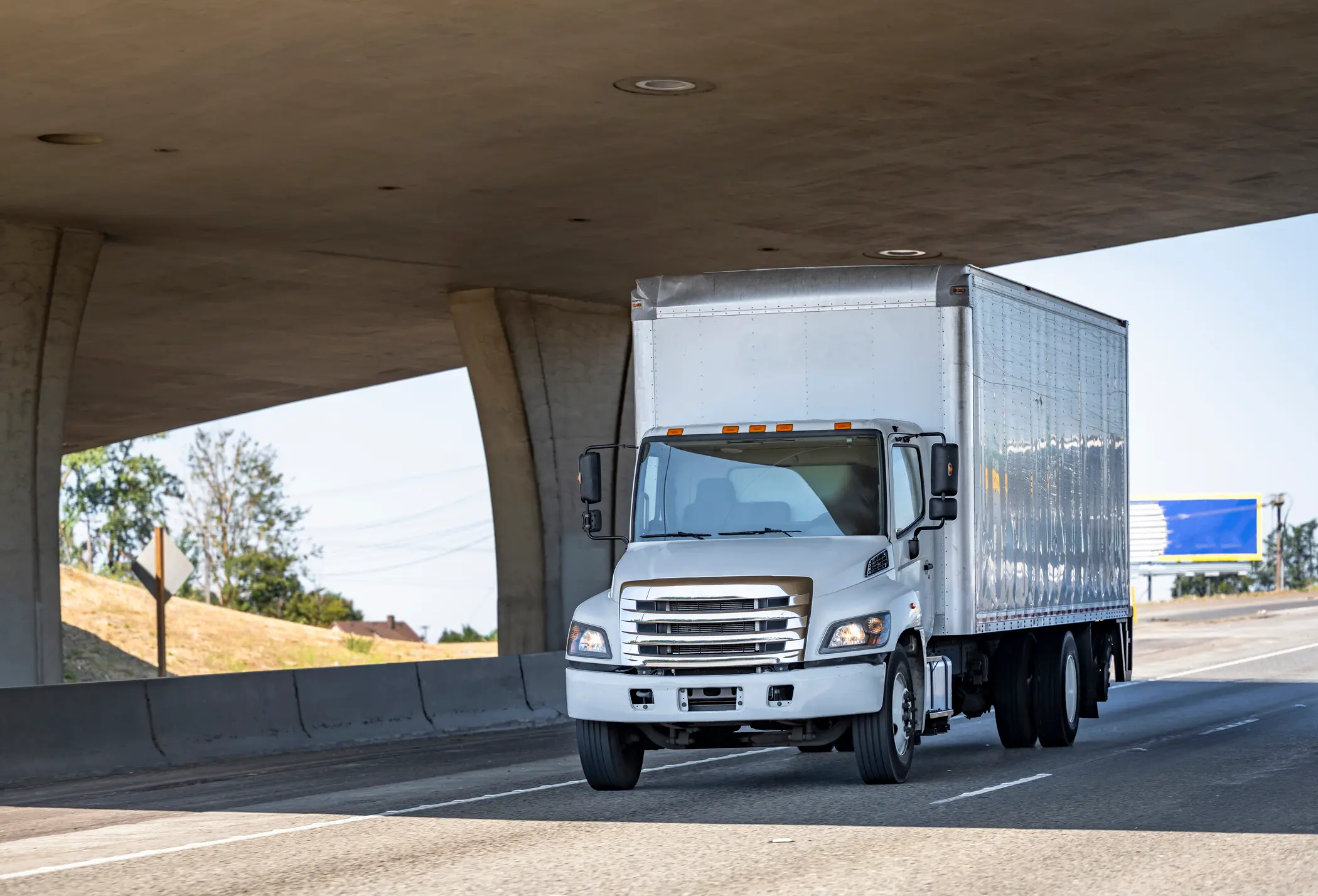
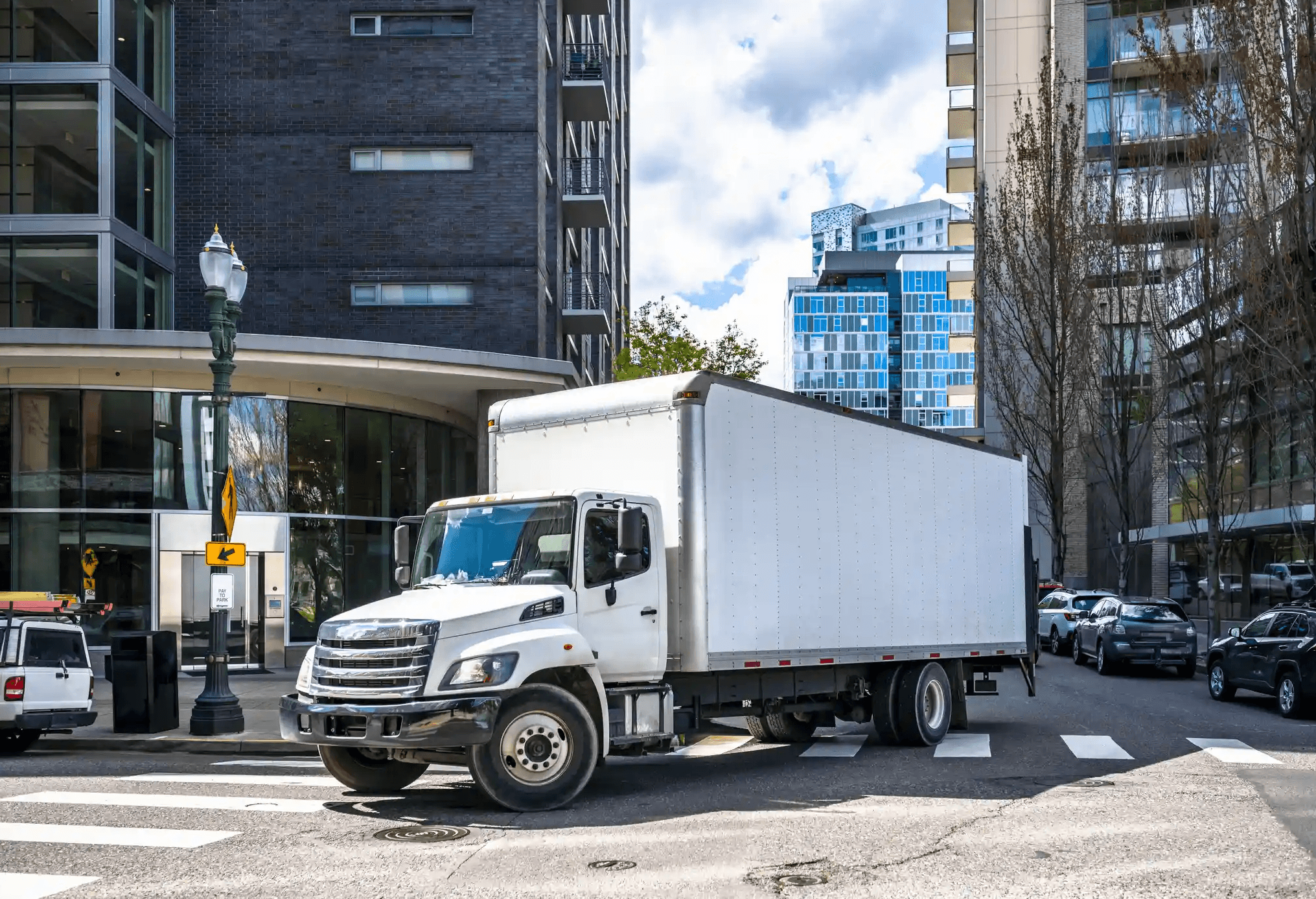
A box truck also known as a straight truck, box van, or cube truck, is an enclosed commercial vehicle with the cargo area built onto the chassis as a single unit, ranging from light-duty 10-foot local delivery vehicles to heavy-duty 26-foot box trucks used in freight and moving operations. Any box truck operated for business use falls outside what a personal auto policy is designed to cover. Commercial auto insurance is part of the operating structure for any business that relies on the vehicle commercially.
Who Needs Box Truck Insurance?
Commercial auto insurance for box trucks applies to any business or operator that uses a box truck for commercial purposes.
The program is available for a wide range of box truck operations across 40 states.
Owner-Operators
Commercial auto liability coverage is part of the operating structure for owner-operators running box trucks under their own MC authority or leased to a motor carrier. Box truck insurance for owner-operators—whether general freight, hotshot, last-mile delivery, or local service operations—is available for new and established operators. New authority operators are welcome.
Delivery and Last-Mile Operations
Box trucks are the primary vehicle for last-mile delivery, e-commerce fulfillment, and local freight distribution. Box truck delivery insurance is part of the operating structure for any for-hire delivery operation. Many delivery platforms and logistics networks, including major e-commerce fulfillment programs, specify minimum cargo limits for operators working within their networks—an appointed agent can confirm the coverage structure appropriate for a specific delivery operation.
Moving Companies and Local Service Businesses
Moving companies, contractors, landscapers, and local service businesses operating box trucks for commercial purposes carry commercial auto coverage as part of their business operations. Insurance for a box truck business—from moving companies and contractors to landscapers and local service operations—is available through the business auto program in select states.
For-Hire Motor Carriers and New Authorities
For-hire motor carriers transporting freight under their own FMCSA operating authority carry ongoing liability exposure on every load. Coverage is available at every stage from new authority through established operations. New authority box truck operators are welcome—the rate is set to the operator's own safety record and driving history.
Non-CDL Box Truck Operators
In most states, box trucks under 26,001 lbs gross vehicle weight fall below the CDL threshold—but commercial auto insurance is part of the operating structure for box truck operations used for commercial purposes. Non-CDL box truck insurance is reviewed on the same factors—vehicle class, driving history, type of operation, and operating radius. An appointed agent can confirm coverage options and state-specific requirements for a specific non-CDL box truck operation.
Box Truck / Box Van Sizes We Cover
STAR Mutual provides commercial auto liability coverage for box trucks across a range of sizes and configurations. An appointed agent can confirm eligibility for a specific vehicle and operation.
Light-Duty Box Trucks (10–16 ft)—commonly used for local deliveries, last-mile operations, service businesses, and independent contractors; typically Class 2–4 vehicles; CDL not required in most states.
Medium-Duty Box Trucks (18–24 ft)—used in regional freight distribution, moving operations, and larger delivery fleets; typically Class 5–6 vehicles.
Heavy-Duty Box Trucks (26 ft)—the largest straight truck configuration; used in interstate freight, furniture delivery, and commercial moving; typically Class 6–7; FMCSA regulations apply for interstate for-hire operations.
Box Truck Insurance Coverage
A complete box truck insurance program combines several coverages, each addressing a different aspect of the operation’s exposure. The coverages below are available for box truck operations through appointed independent agents.
Core Coverages
Additional Coverages
FMCSA Box Truck Insurance Requirements
Commercial auto liability insurance is part of the operating structure for box truck operations used for commercial purposes.
For box trucks operating in interstate commerce under FMCSA authority, federal minimum liability limits vary by type of operation and cargo:
$750,000—for-hire carriers transporting general freight in vehicles over 10,001 lbs.
$1,000,000—commonly specified by freight brokers and shippers regardless of the federal minimum.
For intrastate operations, state-specific commercial auto insurance requirements for box trucks apply. An appointed agent can confirm the applicable structure for a specific box truck operation and state.
Commercial Box Truck Insurance Cost Factors
Box truck insurance premiums are determined by the specific profile of each operation. At STAR Mutual, the determination is individual: the box truck insurance rates reflect the operator’s own safety record and operating history, not a market average that treats every box truck operation the same way. Several factors influence the final rate:
Vehicle class and size—light-duty, medium-duty, and heavy-duty box trucks are weighed differently based on weight class and operating exposure.
Type of operation—local delivery, last-mile, freight distribution, and moving operations each carry different operating characteristics that factor into the rate.
Driving history—the safety record and driving experience of scheduled operators are reflected in the rate; prior violations and loss history are considered alongside.
Operating radius—local operations are rated differently from regional and interstate operations.
Cargo type—the nature of the freight being transported, including value and handling requirements, is weighed in the rate.
Coverage limits selected—the liability limit selected is reflected in the rate; brokers, shippers, and delivery networks commonly specify minimum limits as part of their operating requirements.
New authority or established operation—new authority operations carry higher initial premiums; the rate is reviewed at renewal as the operation builds a record.
An appointed STAR Mutual agent can request a rate for a specific box truck operation and state.
For Agents Who Write Transportation
STAR Mutual gives agents who place trucking business a carrier that works: a clear appetite answer on every submission, a rate that holds at renewal, and a program that keeps safety-first operators on the book.
Fast
Same-Day Eligibility
a fast, clear answer—same-business-day quote review
Fast Filings
BMC-91X and Form E/F filings in 24–48 hours of binding; COIs same day
Easy
Online from Quote to Bind
quote, bind, and service online—filings handled, COIs same-day
No-Interest Billing
zero-interest direct bill, no third-party finance company
Fair
Performance-Based Pricing
the rate reflects each operator's own safety record and history
Disciplined Pool
safety-first operators aren’t carrying the market’s losses
Ready to Place Box Truck Coverage?
Same-day eligibility. Fast filings. A rate that reflects the operator’s own record. STAR Mutual is built for safety-first operators. For the agents who place them, it’s a program that holds at renewal. Long-term relationships start with the right appointment.

States We Cover
STAR Mutual provides commercial box truck insurance in 40 states, including Texas, California, Florida, and Illinois, through appointed independent agents. Coverage availability varies by operation type and state—an appointed agent can confirm availability for a specific box truck operation and location.
Explore States We Cover
Other Vehicle Types We Insure
STAR Mutual provides commercial auto liability insurance for a wide range of commercial vehicles, including refrigerated box trucks used in food delivery, pharmaceutical transport, and perishable goods distribution. An appointed agent can confirm eligibility for a specific vehicle type and operation.
Cargo Van—last-mile delivery, courier operations, and expeditor freight
Reefer / Refrigerated Truck—temperature-controlled transport for food, pharmaceutical, and perishable goods
Semi Truck / Tractor—Class 7–8 power units for long-haul and regional freight
Dump Truck—construction, excavation, and aggregate hauling
Tow Truck—roadside assistance and recovery operations
Flatbed—oversized loads, equipment, and construction materials
Car Hauler—vehicle transport and dealership logistics
Frequently Asked Questions about Commercial Box Truck Insurance
What type of insurance is needed for a box truck?
The foundational coverage for box truck operations used for commercial purposes is commercial auto liability insurance—addressing third-party bodily injury, property damage, and legal defense costs. For box trucks operating as for-hire carriers under FMCSA authority, the BMC-91X filing—placed on record with the FMCSA as part of the policy placement process—is part of the authority activation process.
Beyond the liability policy, most freight brokers and shippers specify motor truck cargo insurance as part of their requirements for working with a motor carrier. Physical damage coverage addresses repair or replacement costs for the box truck itself. Uninsured and underinsured motorist coverage and personal injury protection are available depending on the state and the nature of the operation.
The full coverage structure varies by the type of operation, the states in which the box truck operates, and the specifications of the brokers, shippers, and delivery networks the operator works with. An appointed agent can confirm the appropriate coverage structure for a specific box truck operation.
Do I need commercial auto insurance for a box truck?
Any box truck used for commercial purposes carries commercial auto liability as part of its operating structure. Personal auto policies are not designed for commercial use—a business use claim under a personal policy falls outside that coverage. This applies regardless of vehicle size: a 10-foot box truck used for local deliveries carries commercial auto coverage as part of its operating structure just as a 26-foot straight truck does. State and FMCSA regulations establish minimum limits—an appointed agent can confirm the applicable structure for a specific operation.
What is non-CDL box truck insurance?
Non-CDL box truck insurance is commercial auto coverage for box truck operators who do not hold a Commercial Driver's License. In most states, box trucks under 26,001 lbs gross vehicle weight fall below the CDL threshold—but commercial auto insurance is still part of the operating structure for any business use. Non-CDL status does not affect the commercial auto insurance structure for business use; it may affect eligibility factors and the rate
How to insure a box truck used for deliveries?
Box trucks used for deliveries carry commercial auto liability insurance as the foundational coverage. Depending on the operation, motor truck cargo insurance may also be part of the coverage structure—most delivery networks and freight brokers specify minimum cargo limits for operators working within their networks. Commercial auto liability for box truck delivery operations is available across 40 states through appointed independent agents. An appointed agent can confirm the full coverage structure appropriate for a specific delivery operation.
Does Amazon require box truck insurance?
Many delivery platform and logistics network operators specify minimum insurance levels for box truck operators working within their networks—including minimum liability limits and, in many cases, minimum cargo limits. The specific levels vary by platform and are subject to change. An appointed agent can confirm whether the coverage available meets the specifications of a specific delivery network or platform.
What Is Commercial Box Truck Insurance?
Commercial insurance for a box truck is commercial auto liability coverage and the associated coverages that brokers, shippers, and the nature of the operation call for, available for businesses and operators that use a box truck for commercial purposes.
A box truck also known as a straight truck, box van, or cube truck, is an enclosed commercial vehicle with the cargo area built onto the chassis as a single unit, ranging from light-duty 10-foot local delivery vehicles to heavy-duty 26-foot box trucks used in freight and moving operations. Any box truck operated for business use falls outside what a personal auto policy is designed to cover. Commercial auto insurance is part of the operating structure for any business that relies on the vehicle commercially.
Who Needs Box Truck Insurance?
Commercial auto insurance for box trucks applies to any business or operator that uses a box truck for commercial purposes.
The program is available for a wide range of box truck operations across 40 states.
Owner-Operators
Commercial auto liability coverage is part of the operating structure for owner-operators running box trucks under their own MC authority or leased to a motor carrier. Box truck insurance for owner-operators—whether general freight, hotshot, last-mile delivery, or local service operations—is available for new and established operators. New authority operators are welcome.
Delivery and Last-Mile Operations
Box trucks are the primary vehicle for last-mile delivery, e-commerce fulfillment, and local freight distribution. Box truck delivery insurance is part of the operating structure for any for-hire delivery operation. Many delivery platforms and logistics networks, including major e-commerce fulfillment programs, specify minimum cargo limits for operators working within their networks—an appointed agent can confirm the coverage structure appropriate for a specific delivery operation.
Moving Companies and Local Service Businesses
Moving companies, contractors, landscapers, and local service businesses operating box trucks for commercial purposes carry commercial auto coverage as part of their business operations. Insurance for a box truck business—from moving companies and contractors to landscapers and local service operations—is available through the business auto program in select states.
For-Hire Motor Carriers and New Authorities
For-hire motor carriers transporting freight under their own FMCSA operating authority carry ongoing liability exposure on every load. Coverage is available at every stage from new authority through established operations. New authority box truck operators are welcome—the rate is set to the operator's own safety record and driving history.
Non-CDL Box Truck Operators
In most states, box trucks under 26,001 lbs gross vehicle weight fall below the CDL threshold—but commercial auto insurance is part of the operating structure for box truck operations used for commercial purposes. Non-CDL box truck insurance is reviewed on the same factors—vehicle class, driving history, type of operation, and operating radius. An appointed agent can confirm coverage options and state-specific requirements for a specific non-CDL box truck operation.
Box Truck / Box Van Sizes We Cover
STAR Mutual provides commercial auto liability coverage for box trucks across a range of sizes and configurations. An appointed agent can confirm eligibility for a specific vehicle and operation.
Light-Duty Box Trucks (10–16 ft)—commonly used for local deliveries, last-mile operations, service businesses, and independent contractors; typically Class 2–4 vehicles; CDL not required in most states.
Medium-Duty Box Trucks (18–24 ft)—used in regional freight distribution, moving operations, and larger delivery fleets; typically Class 5–6 vehicles.
Heavy-Duty Box Trucks (26 ft)—the largest straight truck configuration; used in interstate freight, furniture delivery, and commercial moving; typically Class 6–7; FMCSA regulations apply for interstate for-hire operations.
Box Truck Insurance Coverage
A complete box truck insurance program combines several coverages, each addressing a different aspect of the operation’s exposure. The coverages below are available for box truck operations through appointed independent agents.
Core Coverages
Additional Coverages
FMCSA Box Truck Insurance Requirements
Commercial auto liability insurance is part of the operating structure for box truck operations used for commercial purposes.
For box trucks operating in interstate commerce under FMCSA authority, federal minimum liability limits vary by type of operation and cargo:
$750,000—for-hire carriers transporting general freight in vehicles over 10,001 lbs.
$1,000,000—commonly specified by freight brokers and shippers regardless of the federal minimum.
For intrastate operations, state-specific commercial auto insurance requirements for box trucks apply. An appointed agent can confirm the applicable structure for a specific box truck operation and state.
Commercial Box Truck Insurance Cost Factors
Box truck insurance premiums are determined by the specific profile of each operation. At STAR Mutual, the determination is individual: the box truck insurance rates reflect the operator’s own safety record and operating history, not a market average that treats every box truck operation the same way. Several factors influence the final rate:
Vehicle class and size—light-duty, medium-duty, and heavy-duty box trucks are weighed differently based on weight class and operating exposure.
Type of operation—local delivery, last-mile, freight distribution, and moving operations each carry different operating characteristics that factor into the rate.
Driving history—the safety record and driving experience of scheduled operators are reflected in the rate; prior violations and loss history are considered alongside.
Operating radius—local operations are rated differently from regional and interstate operations.
Cargo type—the nature of the freight being transported, including value and handling requirements, is weighed in the rate.
Coverage limits selected—the liability limit selected is reflected in the rate; brokers, shippers, and delivery networks commonly specify minimum limits as part of their operating requirements.
New authority or established operation—new authority operations carry higher initial premiums; the rate is reviewed at renewal as the operation builds a record.
An appointed STAR Mutual agent can request a rate for a specific box truck operation and state.
For Agents Who Write Transportation
STAR Mutual gives agents who place trucking business a carrier that works: a clear appetite answer on every submission, a rate that holds at renewal, and a program that keeps safety-first operators on the book.
Fast
Same-Day Eligibility
a fast, clear answer—same-business-day quote review
Fast Filings
BMC-91X and Form E/F filings in 24–48 hours of binding; COIs same day
Easy
Online from Quote to Bind
quote, bind, and service online—filings handled, COIs same-day
No-Interest Billing
zero-interest direct bill, no third-party finance company
Fair
Performance-Based Pricing
the rate reflects each operator's own safety record and history
Disciplined Pool
safety-first operators aren’t carrying the market’s losses
Ready to Place Box Truck Coverage?
Same-day eligibility. Fast filings. A rate that reflects the operator’s own record. STAR Mutual is built for safety-first operators. For the agents who place them, it’s a program that holds at renewal. Long-term relationships start with the right appointment.
States We Cover
STAR Mutual provides commercial box truck insurance in 40 states, including Texas, California, Florida, and Illinois, through appointed independent agents. Coverage availability varies by operation type and state—an appointed agent can confirm availability for a specific box truck operation and location.
Explore States We Cover
Other Vehicle Types We Insure
STAR Mutual provides commercial auto liability insurance for a wide range of commercial vehicles, including refrigerated box trucks used in food delivery, pharmaceutical transport, and perishable goods distribution. An appointed agent can confirm eligibility for a specific vehicle type and operation.
Cargo Van—last-mile delivery, courier operations, and expeditor freight
Reefer / Refrigerated Truck—temperature-controlled transport for food, pharmaceutical, and perishable goods
Semi Truck / Tractor—Class 7–8 power units for long-haul and regional freight
Dump Truck—construction, excavation, and aggregate hauling
Tow Truck—roadside assistance and recovery operations
Flatbed—oversized loads, equipment, and construction materials
Car Hauler—vehicle transport and dealership logistics
Frequently Asked Questions about Commercial Box Truck Insurance
What type of insurance is needed for a box truck?
The foundational coverage for box truck operations used for commercial purposes is commercial auto liability insurance—addressing third-party bodily injury, property damage, and legal defense costs. For box trucks operating as for-hire carriers under FMCSA authority, the BMC-91X filing—placed on record with the FMCSA as part of the policy placement process—is part of the authority activation process.
Beyond the liability policy, most freight brokers and shippers specify motor truck cargo insurance as part of their requirements for working with a motor carrier. Physical damage coverage addresses repair or replacement costs for the box truck itself. Uninsured and underinsured motorist coverage and personal injury protection are available depending on the state and the nature of the operation.
The full coverage structure varies by the type of operation, the states in which the box truck operates, and the specifications of the brokers, shippers, and delivery networks the operator works with. An appointed agent can confirm the appropriate coverage structure for a specific box truck operation.
Do I need commercial auto insurance for a box truck?
Any box truck used for commercial purposes carries commercial auto liability as part of its operating structure. Personal auto policies are not designed for commercial use—a business use claim under a personal policy falls outside that coverage. This applies regardless of vehicle size: a 10-foot box truck used for local deliveries carries commercial auto coverage as part of its operating structure just as a 26-foot straight truck does. State and FMCSA regulations establish minimum limits—an appointed agent can confirm the applicable structure for a specific operation.
What is non-CDL box truck insurance?
Non-CDL box truck insurance is commercial auto coverage for box truck operators who do not hold a Commercial Driver's License. In most states, box trucks under 26,001 lbs gross vehicle weight fall below the CDL threshold—but commercial auto insurance is still part of the operating structure for any business use. Non-CDL status does not affect the commercial auto insurance structure for business use; it may affect eligibility factors and the rate
How to insure a box truck used for deliveries?
Box trucks used for deliveries carry commercial auto liability insurance as the foundational coverage. Depending on the operation, motor truck cargo insurance may also be part of the coverage structure—most delivery networks and freight brokers specify minimum cargo limits for operators working within their networks. Commercial auto liability for box truck delivery operations is available across 40 states through appointed independent agents. An appointed agent can confirm the full coverage structure appropriate for a specific delivery operation.
Does Amazon require box truck insurance?
Many delivery platform and logistics network operators specify minimum insurance levels for box truck operators working within their networks—including minimum liability limits and, in many cases, minimum cargo limits. The specific levels vary by platform and are subject to change. An appointed agent can confirm whether the coverage available meets the specifications of a specific delivery network or platform.
On this page
How to Get Insurance with STAR Mutual RRG
STAR Mutual insurance coverage is available exclusively through appointed independent agents—agents who know the program, understand the appetite, and can give a same-day answer on eligibility.
1
Ask the agent
The operator's current insurance agent can confirm whether they are appointed with STAR Mutual; if not, they can be appointed through the 'Get appointed' form submission.
2
Submit the operation details
The agent gets access to our platform and submits the operation details—vehicle type, trucking class, operating radius, and driver history. Most submissions receive an immediate eligibility response, same day.
3
Get the policy placed
Once eligible, the policy is placed online. COIs are available same day. BMC-91X and state filings are submitted as part of the placement process; the MCS-90 endorsement is issued with the policy.
Get appointed
Agent login
Related Resources
Become a STAR Agent
Become a STAR Agent
Get access to unparalleled technology-based service to quote and bind your clients in minutes.
Get appointed
Agent login
Thousands of agents across the United States | Same-day quotes, ready to bind


STAR Mutual Risk Retention Group offers commercial auto liability insurance to the members of Reliable Transportation Association (“RTA”), looking for accessible and reliable coverage.
Contact
855-5MY-STAR (855-569-7827)
STAR Mutual RRG
PO Box 51414, Philadelphia
PA 19115
General inquiries:
Agent inquiries:
Claim inquiries:
Coverage
The information presented on this website is for general informational purposes only and does not constitute legal, regulatory, or business advice. Readers are encouraged to consult with qualified legal or insurance professionals regarding questions specific to their circumstances.
The content is provided for general informational purposes only and does not constitute an offer to sell, or a solicitation of an offer to buy, insurance in any jurisdiction where STAR Mutual RRG is not licensed or registered. Any description of coverage is general and subject to the terms, conditions, and exclusions of the actual policy.
© 2026 - STAR Mutual RRG. All rights reserved.