Waste Hauler Insurance: Liability Coverage, Requirements, and Risk Management
Commercial auto liability is the core of waste hauler insurance. Here’s what it covers, which add-ons like physical damage and general liability fit different operations, and what shapes the cost.
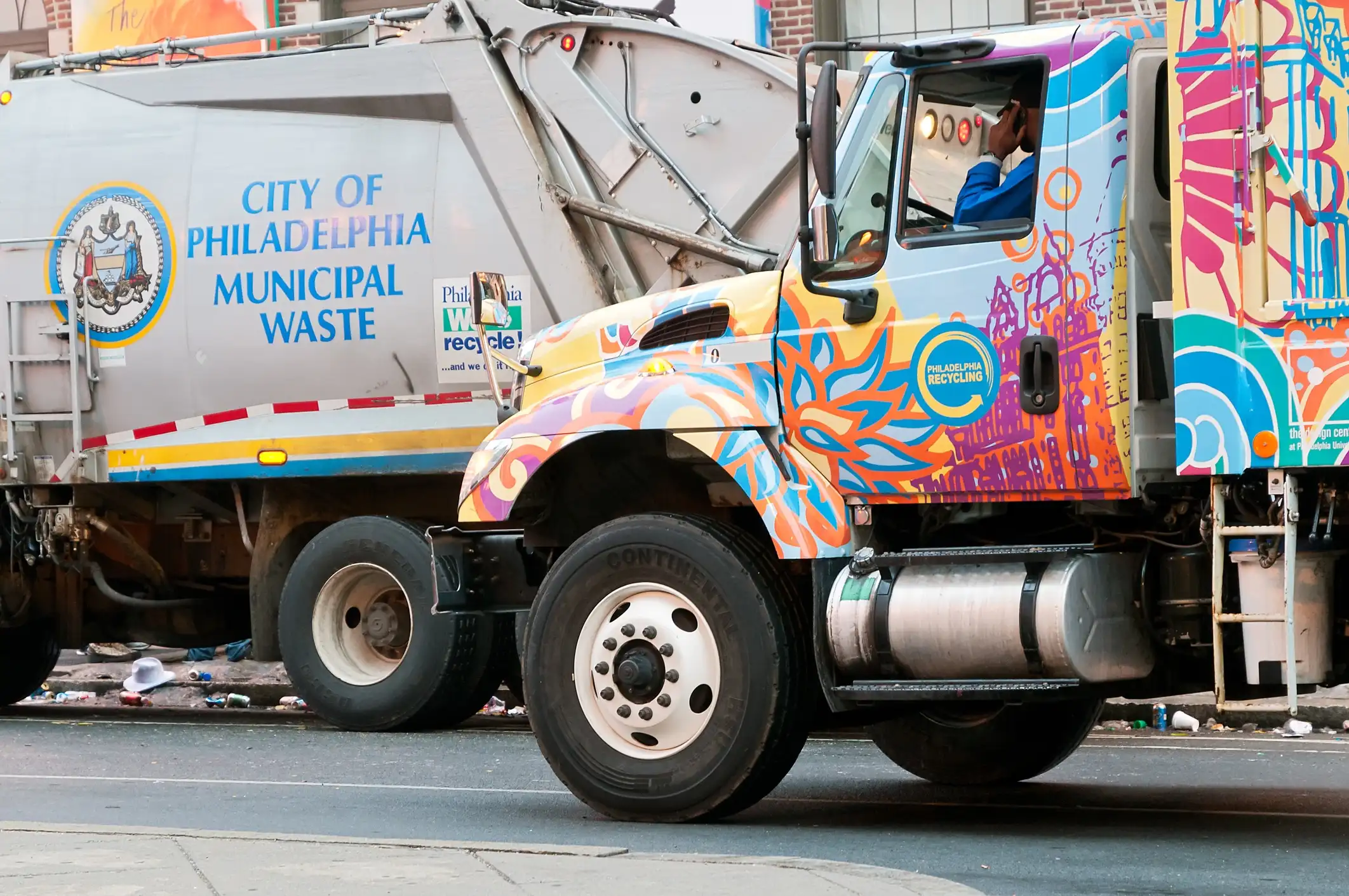
Waste collection trucks work very differently from most commercial vehicles. A single residential route can involve hundreds of stops, tight maneuvering, pedestrians, parked vehicles, overhead lines, hydraulic equipment, and loads that may shift or contain unexpected materials. A roll-off truck hauling construction debris faces a different exposure profile from a front-loader servicing commercial dumpsters.
Waste hauler insurance is built around these operational differences. This guide explains how coverage typically works, what happens in common situations on the route, which federal, state, and local requirements may apply, and which risk-management practices support long-term insurability.
What is waste hauler insurance?
Waste hauler insurance is a combination of commercial coverages for businesses that collect and transport solid waste, recyclables, construction debris, or regulated waste. It typically centers on commercial auto liability and may include pollution liability, general liability, auto physical damage, and workers’ compensation, depending on the operation.
The right combination depends on how the business operates, including what is hauled, how it is collected, what equipment is used, and where the trucks operate.
Common operation types include:
Residential and commercial collection: rear-load, front-load, and automated side-load garbage trucks running high-frequency stop routes
Roll-off and construction and demolition (C&D) debris: hook-lift and cable trucks placing and retrieving containers at job sites. Roll-off truck insurance needs often differ from curbside collection because of container placement, heavier loads, and open-top hauling. For haulers that operate dump trucks alongside roll-off equipment, Dump Truck Insurance: Managing Liability in Heavy Hauling covers related exposures in more detail.
Transfer and long-haul disposal: walking-floor trailers and other equipment moving consolidated waste from transfer stations to landfills, sometimes across state lines.
Specialized and regulated waste: liquid, septic, or vacuum truck operations, which carry their own handling considerations.
Waste hauling incidents by the numbers
Waste and recyclable material collection remains one of the higher-risk occupations in the United States, and most of its on-the-job fatalities involve vehicles rather than material handling.
In 2024, the most recent year of federal data, refuse and recyclable material collectors recorded 37.4 fatalities per 100,000 full-time equivalent workers—the fifth-highest rate among U.S. civilian occupations, down from 41.4 in 2023, when the category ranked fourth, according to the U.S. Bureau of Labor Statistics Census of Fatal Occupational Injuries.
Transportation incidents are the dominant fatal exposure in the work: in the BLS solid waste collection category, 23 of 32 fatalities in 2024 were tied to transportation incidents—vehicle operation, not material handling, is where the risk is concentrated.
Across all U.S. occupations, transportation incidents were the most common type of fatal work event, accounting for 38.2% of the total in 2024.
The figures highlight why transportation safety remains a central consideration for waste hauling operations. High-frequency routes, backing, roadside work, heavy equipment, and interaction with pedestrians and other vehicles create exposures that require consistent risk management.
What does waste hauler insurance cover?
Waste hauler insurance typically covers damage or injury caused to others, damage to the truck itself, certain pollution-related losses, and injuries to employees. This is done through a combination of commercial auto liability, auto physical damage, pollution liability, general liability, and workers’ compensation. Each coverage line addresses a different part of the operation.
Commercial auto liability
Commercial auto liability is the foundation. It addresses bodily injury and property damage to others arising from the operation of a covered vehicle. That can include a collision or, depending on policy terms, debris that falls from a load and damages another vehicle. Auto Liability Insurance for Trucks covers how this coverage works in more detail.
Pollution liability
Commercial auto policies generally exclude pollution events, apart from fluids needed to operate the vehicle, such as fuel or brake fluid. A spill of other materials may therefore sit outside the auto liability policy and is typically handled separately—through a broadened pollution endorsement such as CA 99 48, which modifies the standard exclusion for a covered auto, or a standalone transportation pollution liability policy. Whether either applies depends on the waste stream and can be reviewed with an insurance agent.
General liability
General liability may address exposures away from the road, such as injuries at a customer location or property damage during certain container-placement activities.
Whether an incident falls under auto or general liability can depend on the circumstances and how the applicable policies define activities such as loading and unloading. Having both policies reviewed together can help avoid gaps where neither one applies.
Auto physical damage (APD)
Auto physical damage (APD) covers repair or replacement of the truck itself after covered damage, such as a collision, fire, theft, or weather event.
Waste collection trucks can represent significant equipment values, particularly when they carry compaction bodies, hydraulic lift systems, specialized hoists, and other high-value components. Comprehensive coverage may also be relevant to risks such as fires involving discarded batteries or other materials in the waste stream.
Workers’ compensation
Workers’ compensation addresses employee injuries and is separate from commercial auto liability. This distinction is particularly important for collection crews who work at the curb, ride on collection vehicles, or handle containers and equipment.
Motor truck cargo
Motor truck cargo coverage is often a poor fit for waste loads. Waste generally has limited or no insured cargo value, and many cargo forms exclude refuse. Operators hauling recyclable commodities with resale value may want to review this with an insurance agent.
Common situations on the route and which coverage may apply
Real incidents rarely come labeled with a coverage type. These examples show how different situations may be handled, though the actual outcome always depends on the facts and policy language:
Debris falls from an untarped roll-off and cracks another driver’s windshield: commercial auto liability may respond to the other driver’s damage.
A garbage truck catches fire after a battery ignites in the hopper: damage to the truck may fall under the comprehensive portion of auto physical damage.
A container placed on a customer’s driveway cracks the concrete: depending on policy definitions, this may fall under general liability or auto liability.
A collector is injured while stepping off the riding platform: workers’ compensation typically addresses employee injuries.
Hauled liquid waste leaks onto the roadway after a collision: cleanup costs may require pollution coverage beyond the basic auto policy.
A backing truck strikes a parked car in an alley: commercial auto liability may cover the damage to the parked car, and auto physical damage may cover the truck.
Reviewing these kinds of scenarios with an insurance agent may help confirm the coverage in place matches the work the trucks actually do.
Waste hauler insurance requirements
Insurance requirements for waste haulers come from several sources, including federal regulations, environmental rules, state financial responsibility laws, local permits, and customer contracts. Which ones apply depends on the materials hauled, vehicle weight, for-hire status, and whether the operation crosses state lines.
Federal financial responsibility (FMCSA)
Waste haulers that cross state lines for hire generally must carry a federal minimum level of liability coverage, set under 49 CFR Part 387. For-hire carriers of nonhazardous property in interstate commerce with vehicles rated at 10,001 pounds or more must carry at least $750,000 in public liability coverage.
Not every waste hauling operation is subject to these federal requirements. Operations that remain entirely within one state may instead be governed primarily by state financial responsibility rules and applicable local requirements. However, federal minimums still apply to certain hazardous materials and hazardous waste transported in bulk, even within a single state.
In plain terms: a garbage truck running local routes within one state usually follows state and city rules. Trucks crossing state lines, or hauling hazardous waste, may need to meet federal minimums.
Hazardous waste hauling: a separate regulatory track
Most waste hauling—ordinary household trash, recyclables, and C&D debris—does not require an EPA identification number, and the obligations below generally do not apply. The heavier federal regime is specific to manifested hazardous waste: transporters of that material fall under 40 CFR Part 263, which layers EPA identification, manifesting, recordkeeping, and discharge-response requirements on top of the rules already covered. For a typical collection or roll-off operation, that track sits outside day-to-day requirements.
Where liability exposure concentrates in waste hauling
Waste hauling exposures extend well beyond highway collisions. The key pressure points reflect the practical realities of waste collection:
Backing and low-speed maneuvering: tight residential streets, alleys, and customer lots.
High stop frequency: constant interaction with pedestrians, parked vehicles, and residential traffic.
Unsecured or untarped loads: road debris from roll-offs and open-top containers, which state load securement laws regulate.
Hydraulic and mechanical equipment: lift arms and hoists near overhead lines, structures, and driveways.
Disposal site operations: landfill and transfer station traffic, uneven surfaces, and tipping activity.
Unexpected materials in the waste stream: improperly discarded chemicals, batteries, or medical items.
Subcontracted haulers and leased equipment: unclear contractual responsibility for losses.
Multi-jurisdiction routes: differing state and local rules for operations crossing county or state lines.
What affects the cost of waste hauler insurance?
Waste hauler insurance pricing is not based on a single standard rate. The characteristics of the individual operation matter. Factors that commonly influence commercial auto insurance pricing may include:
Types of waste hauled and collection method
Vehicle types, ages, and values
Operating radius and territory
Driver experience and motor vehicle records
Loss history
Inspection and roadside compliance results
Selected limits and endorsements
Subcontractor use and other operational characteristics
Many of these factors are within an operation's control. Documented safety practices and a consistent claims history may support more predictable pricing over time.
Safety practices that support long-term insurability
Waste hauling operations that invest in structured safety programs often experience fewer incidents and clearer claim outcomes. Practices commonly used across the industry include:
Backing controls: limiting backing where possible, using spotters, and equipping trucks with rear and 360-degree cameras.
Route design: reducing reversing, difficult turns, and unnecessary street crossings to lower incident likelihood.
Load securement: tarping and securing roll-off and open-top loads before leaving the site.
Equipment inspections: covering hydraulics, lift arms, and compaction systems alongside standard pre-trip checks.
Hot load and spill procedures: onboard response kits and driver training aligned with discharge-response requirements.
Documentation: disposal records, manifests, inspection reports, telematics, and camera footage.
Well-kept records also support more accurate and timely claim resolution. Prompt claim reporting and complete documentation may help provide a clearer picture of what happened when an incident occurs. Why Filing Commercial Auto Insurance Claims on Time Is Crucial explains why timely reporting matters.
Choosing insurance coverage for a waste hauling operation
Selecting coverage for waste hauling is less about finding a single policy and more about matching the insurance program to how the operation actually works—the types of waste hauled, collection methods, vehicle configurations, operating territories, and use of subcontractors or leased equipment.
Confirming that liability limits and additional insured requirements satisfy municipal and commercial contracts before bidding helps close the most common gaps. Keeping vehicles and drivers properly scheduled and communicating material changes to the agent and insurance carrier keep coverage aligned with how the operation runs; The Risks of Unscheduled Units or Drivers on a Policy explains why this matters.
Working with an independent agent experienced in commercial transportation can help coordinate the different coverage lines and identify potential gaps before a loss occurs.
STAR Mutual RRG is a member-owned risk retention group providing commercial auto liability insurance for transportation operations, including waste haulers and dump trucks.
Frequently asked questions
What does waste hauler insurance cover?
Waste hauler insurance typically includes commercial auto liability for damage or injury caused to others, auto physical damage for the truck itself, pollution coverage for certain spills, general liability for off-road incidents, and workers' compensation for employee injuries. The exact mix depends on the operation.
Is garbage truck insurance different from regular commercial truck insurance?
Garbage truck insurance is built on the same commercial auto foundation but often needs additional attention to pollution exposure, container placement, hydraulic equipment, and local permit requirements. Refuse truck and roll-off truck operations face risks that general freight haulers typically do not.
How much does waste hauler insurance cost?
Waste hauler insurance cost varies by operation. There is no single standard rate. Pricing is influenced by the types of waste hauled, collection method, vehicle values, operating territory, driver records, loss history, and selected limits and endorsements.
Do waste haulers need an MCS-90 endorsement?
Interstate for-hire carriers subject to federal financial responsibility rules may need an MCS-90 endorsement as evidence of coverage. Most local, intrastate collection operations are governed by state requirements instead.
How much liability coverage does a waste hauler need?
Federal financial responsibility requirements vary by operation and the materials transported. For certain interstate for-hire carriers of nonhazardous property, the federal minimum is $750,000. Higher federal minimums apply to hazardous materials. Municipal and commercial contracts may also require limits above the federal minimum, so both regulatory and contractual requirements warrant review.
Waste collection trucks work very differently from most commercial vehicles. A single residential route can involve hundreds of stops, tight maneuvering, pedestrians, parked vehicles, overhead lines, hydraulic equipment, and loads that may shift or contain unexpected materials. A roll-off truck hauling construction debris faces a different exposure profile from a front-loader servicing commercial dumpsters.
Waste hauler insurance is built around these operational differences. This guide explains how coverage typically works, what happens in common situations on the route, which federal, state, and local requirements may apply, and which risk-management practices support long-term insurability.
What is waste hauler insurance?
Waste hauler insurance is a combination of commercial coverages for businesses that collect and transport solid waste, recyclables, construction debris, or regulated waste. It typically centers on commercial auto liability and may include pollution liability, general liability, auto physical damage, and workers’ compensation, depending on the operation.
The right combination depends on how the business operates, including what is hauled, how it is collected, what equipment is used, and where the trucks operate.
Common operation types include:
Residential and commercial collection: rear-load, front-load, and automated side-load garbage trucks running high-frequency stop routes
Roll-off and construction and demolition (C&D) debris: hook-lift and cable trucks placing and retrieving containers at job sites. Roll-off truck insurance needs often differ from curbside collection because of container placement, heavier loads, and open-top hauling. For haulers that operate dump trucks alongside roll-off equipment, Dump Truck Insurance: Managing Liability in Heavy Hauling covers related exposures in more detail.
Transfer and long-haul disposal: walking-floor trailers and other equipment moving consolidated waste from transfer stations to landfills, sometimes across state lines.
Specialized and regulated waste: liquid, septic, or vacuum truck operations, which carry their own handling considerations.
Waste hauling incidents by the numbers
Waste and recyclable material collection remains one of the higher-risk occupations in the United States, and most of its on-the-job fatalities involve vehicles rather than material handling.
In 2024, the most recent year of federal data, refuse and recyclable material collectors recorded 37.4 fatalities per 100,000 full-time equivalent workers—the fifth-highest rate among U.S. civilian occupations, down from 41.4 in 2023, when the category ranked fourth, according to the U.S. Bureau of Labor Statistics Census of Fatal Occupational Injuries.
Transportation incidents are the dominant fatal exposure in the work: in the BLS solid waste collection category, 23 of 32 fatalities in 2024 were tied to transportation incidents—vehicle operation, not material handling, is where the risk is concentrated.
Across all U.S. occupations, transportation incidents were the most common type of fatal work event, accounting for 38.2% of the total in 2024.
The figures highlight why transportation safety remains a central consideration for waste hauling operations. High-frequency routes, backing, roadside work, heavy equipment, and interaction with pedestrians and other vehicles create exposures that require consistent risk management.
What does waste hauler insurance cover?
Waste hauler insurance typically covers damage or injury caused to others, damage to the truck itself, certain pollution-related losses, and injuries to employees. This is done through a combination of commercial auto liability, auto physical damage, pollution liability, general liability, and workers’ compensation. Each coverage line addresses a different part of the operation.
Commercial auto liability
Commercial auto liability is the foundation. It addresses bodily injury and property damage to others arising from the operation of a covered vehicle. That can include a collision or, depending on policy terms, debris that falls from a load and damages another vehicle. Auto Liability Insurance for Trucks covers how this coverage works in more detail.
Pollution liability
Commercial auto policies generally exclude pollution events, apart from fluids needed to operate the vehicle, such as fuel or brake fluid. A spill of other materials may therefore sit outside the auto liability policy and is typically handled separately—through a broadened pollution endorsement such as CA 99 48, which modifies the standard exclusion for a covered auto, or a standalone transportation pollution liability policy. Whether either applies depends on the waste stream and can be reviewed with an insurance agent.
General liability
General liability may address exposures away from the road, such as injuries at a customer location or property damage during certain container-placement activities.
Whether an incident falls under auto or general liability can depend on the circumstances and how the applicable policies define activities such as loading and unloading. Having both policies reviewed together can help avoid gaps where neither one applies.
Auto physical damage (APD)
Auto physical damage (APD) covers repair or replacement of the truck itself after covered damage, such as a collision, fire, theft, or weather event.
Waste collection trucks can represent significant equipment values, particularly when they carry compaction bodies, hydraulic lift systems, specialized hoists, and other high-value components. Comprehensive coverage may also be relevant to risks such as fires involving discarded batteries or other materials in the waste stream.
Workers’ compensation
Workers’ compensation addresses employee injuries and is separate from commercial auto liability. This distinction is particularly important for collection crews who work at the curb, ride on collection vehicles, or handle containers and equipment.
Motor truck cargo
Motor truck cargo coverage is often a poor fit for waste loads. Waste generally has limited or no insured cargo value, and many cargo forms exclude refuse. Operators hauling recyclable commodities with resale value may want to review this with an insurance agent.
Common situations on the route and which coverage may apply
Real incidents rarely come labeled with a coverage type. These examples show how different situations may be handled, though the actual outcome always depends on the facts and policy language:
Debris falls from an untarped roll-off and cracks another driver’s windshield: commercial auto liability may respond to the other driver’s damage.
A garbage truck catches fire after a battery ignites in the hopper: damage to the truck may fall under the comprehensive portion of auto physical damage.
A container placed on a customer’s driveway cracks the concrete: depending on policy definitions, this may fall under general liability or auto liability.
A collector is injured while stepping off the riding platform: workers’ compensation typically addresses employee injuries.
Hauled liquid waste leaks onto the roadway after a collision: cleanup costs may require pollution coverage beyond the basic auto policy.
A backing truck strikes a parked car in an alley: commercial auto liability may cover the damage to the parked car, and auto physical damage may cover the truck.
Reviewing these kinds of scenarios with an insurance agent may help confirm the coverage in place matches the work the trucks actually do.
Waste hauler insurance requirements
Insurance requirements for waste haulers come from several sources, including federal regulations, environmental rules, state financial responsibility laws, local permits, and customer contracts. Which ones apply depends on the materials hauled, vehicle weight, for-hire status, and whether the operation crosses state lines.
Federal financial responsibility (FMCSA)
Waste haulers that cross state lines for hire generally must carry a federal minimum level of liability coverage, set under 49 CFR Part 387. For-hire carriers of nonhazardous property in interstate commerce with vehicles rated at 10,001 pounds or more must carry at least $750,000 in public liability coverage.
Not every waste hauling operation is subject to these federal requirements. Operations that remain entirely within one state may instead be governed primarily by state financial responsibility rules and applicable local requirements. However, federal minimums still apply to certain hazardous materials and hazardous waste transported in bulk, even within a single state.
In plain terms: a garbage truck running local routes within one state usually follows state and city rules. Trucks crossing state lines, or hauling hazardous waste, may need to meet federal minimums.
Hazardous waste hauling: a separate regulatory track
Most waste hauling—ordinary household trash, recyclables, and C&D debris—does not require an EPA identification number, and the obligations below generally do not apply. The heavier federal regime is specific to manifested hazardous waste: transporters of that material fall under 40 CFR Part 263, which layers EPA identification, manifesting, recordkeeping, and discharge-response requirements on top of the rules already covered. For a typical collection or roll-off operation, that track sits outside day-to-day requirements.
Where liability exposure concentrates in waste hauling
Waste hauling exposures extend well beyond highway collisions. The key pressure points reflect the practical realities of waste collection:
Backing and low-speed maneuvering: tight residential streets, alleys, and customer lots.
High stop frequency: constant interaction with pedestrians, parked vehicles, and residential traffic.
Unsecured or untarped loads: road debris from roll-offs and open-top containers, which state load securement laws regulate.
Hydraulic and mechanical equipment: lift arms and hoists near overhead lines, structures, and driveways.
Disposal site operations: landfill and transfer station traffic, uneven surfaces, and tipping activity.
Unexpected materials in the waste stream: improperly discarded chemicals, batteries, or medical items.
Subcontracted haulers and leased equipment: unclear contractual responsibility for losses.
Multi-jurisdiction routes: differing state and local rules for operations crossing county or state lines.
What affects the cost of waste hauler insurance?
Waste hauler insurance pricing is not based on a single standard rate. The characteristics of the individual operation matter. Factors that commonly influence commercial auto insurance pricing may include:
Types of waste hauled and collection method
Vehicle types, ages, and values
Operating radius and territory
Driver experience and motor vehicle records
Loss history
Inspection and roadside compliance results
Selected limits and endorsements
Subcontractor use and other operational characteristics
Many of these factors are within an operation's control. Documented safety practices and a consistent claims history may support more predictable pricing over time.
Safety practices that support long-term insurability
Waste hauling operations that invest in structured safety programs often experience fewer incidents and clearer claim outcomes. Practices commonly used across the industry include:
Backing controls: limiting backing where possible, using spotters, and equipping trucks with rear and 360-degree cameras.
Route design: reducing reversing, difficult turns, and unnecessary street crossings to lower incident likelihood.
Load securement: tarping and securing roll-off and open-top loads before leaving the site.
Equipment inspections: covering hydraulics, lift arms, and compaction systems alongside standard pre-trip checks.
Hot load and spill procedures: onboard response kits and driver training aligned with discharge-response requirements.
Documentation: disposal records, manifests, inspection reports, telematics, and camera footage.
Well-kept records also support more accurate and timely claim resolution. Prompt claim reporting and complete documentation may help provide a clearer picture of what happened when an incident occurs. Why Filing Commercial Auto Insurance Claims on Time Is Crucial explains why timely reporting matters.
Choosing insurance coverage for a waste hauling operation
Selecting coverage for waste hauling is less about finding a single policy and more about matching the insurance program to how the operation actually works—the types of waste hauled, collection methods, vehicle configurations, operating territories, and use of subcontractors or leased equipment.
Confirming that liability limits and additional insured requirements satisfy municipal and commercial contracts before bidding helps close the most common gaps. Keeping vehicles and drivers properly scheduled and communicating material changes to the agent and insurance carrier keep coverage aligned with how the operation runs; The Risks of Unscheduled Units or Drivers on a Policy explains why this matters.
Working with an independent agent experienced in commercial transportation can help coordinate the different coverage lines and identify potential gaps before a loss occurs.
STAR Mutual RRG is a member-owned risk retention group providing commercial auto liability insurance for transportation operations, including waste haulers and dump trucks.
Frequently asked questions
What does waste hauler insurance cover?
Waste hauler insurance typically includes commercial auto liability for damage or injury caused to others, auto physical damage for the truck itself, pollution coverage for certain spills, general liability for off-road incidents, and workers' compensation for employee injuries. The exact mix depends on the operation.
Is garbage truck insurance different from regular commercial truck insurance?
Garbage truck insurance is built on the same commercial auto foundation but often needs additional attention to pollution exposure, container placement, hydraulic equipment, and local permit requirements. Refuse truck and roll-off truck operations face risks that general freight haulers typically do not.
How much does waste hauler insurance cost?
Waste hauler insurance cost varies by operation. There is no single standard rate. Pricing is influenced by the types of waste hauled, collection method, vehicle values, operating territory, driver records, loss history, and selected limits and endorsements.
Do waste haulers need an MCS-90 endorsement?
Interstate for-hire carriers subject to federal financial responsibility rules may need an MCS-90 endorsement as evidence of coverage. Most local, intrastate collection operations are governed by state requirements instead.
How much liability coverage does a waste hauler need?
Federal financial responsibility requirements vary by operation and the materials transported. For certain interstate for-hire carriers of nonhazardous property, the federal minimum is $750,000. Higher federal minimums apply to hazardous materials. Municipal and commercial contracts may also require limits above the federal minimum, so both regulatory and contractual requirements warrant review.
Contents
Stay up-to-date
Related Post
Become a STAR Agent
Become a STAR Agent
Get access to unparalleled technology-based service to quote and bind your clients in minutes.
Get appointed
Thousands of agents across the United States | Same-day quotes, ready to bind

STAR Mutual Risk Retention Group offers commercial auto liability insurance to the members of Reliable Transportation Association (“RTA”), looking for accessible and reliable coverage.
Contact
855-5MY-STAR (855-569-7827)
STAR Mutual RRG
PO Box 51414, Philadelphia
PA 19115
General inquiries:
Agent inquiries:
Claim inquiries:
The information presented on this website is for general informational purposes only and does not constitute legal, regulatory, or business advice. Readers are encouraged to consult with qualified legal or insurance professionals regarding questions specific to their circumstances.
The content is provided for general informational purposes only and does not constitute an offer to sell, or a solicitation of an offer to buy, insurance in any jurisdiction where STAR Mutual RRG is not licensed or registered. Any description of coverage is general and subject to the terms, conditions, and exclusions of the actual policy.
STAR Mutual Risk Retention Group offers commercial auto liability insurance to the members of Reliable Transportation Association (“RTA”), looking for accessible and reliable coverage.
Contact
855-5MY-STAR (855-569-7827)
STAR Mutual RRG
PO Box 51414, Philadelphia
PA 19115
General inquiries:
Agent inquiries:
Claim inquiries:
The information presented on this website is for general informational purposes only and does not constitute legal, regulatory, or business advice. Readers are encouraged to consult with qualified legal or insurance professionals regarding questions specific to their circumstances.
The content is provided for general informational purposes only and does not constitute an offer to sell, or a solicitation of an offer to buy, insurance in any jurisdiction where STAR Mutual RRG is not licensed or registered. Any description of coverage is general and subject to the terms, conditions, and exclusions of the actual policy.
STAR Mutual Risk Retention Group offers commercial auto liability insurance to the members of Reliable Transportation Association (“RTA”), looking for accessible and reliable coverage.
Contact
855-5MY-STAR (855-569-7827)
STAR Mutual RRG
PO Box 51414, Philadelphia
PA 19115
General inquiries:
Agent inquiries:
Claim inquiries:
The information presented on this website is for general informational purposes only and does not constitute legal, regulatory, or business advice. Readers are encouraged to consult with qualified legal or insurance professionals regarding questions specific to their circumstances.
The content is provided for general informational purposes only and does not constitute an offer to sell, or a solicitation of an offer to buy, insurance in any jurisdiction where STAR Mutual RRG is not licensed or registered. Any description of coverage is general and subject to the terms, conditions, and exclusions of the actual policy.
© 2026 - STAR Mutual RRG. All rights reserved.