Tractor-Trailer Insurance: Liability Requirements, Costs and Risk Factors
An overview of commercial tractor-trailer insurance, federal liability requirements, underwriting evaluation factors, and cost considerations for commercial motor carriers.
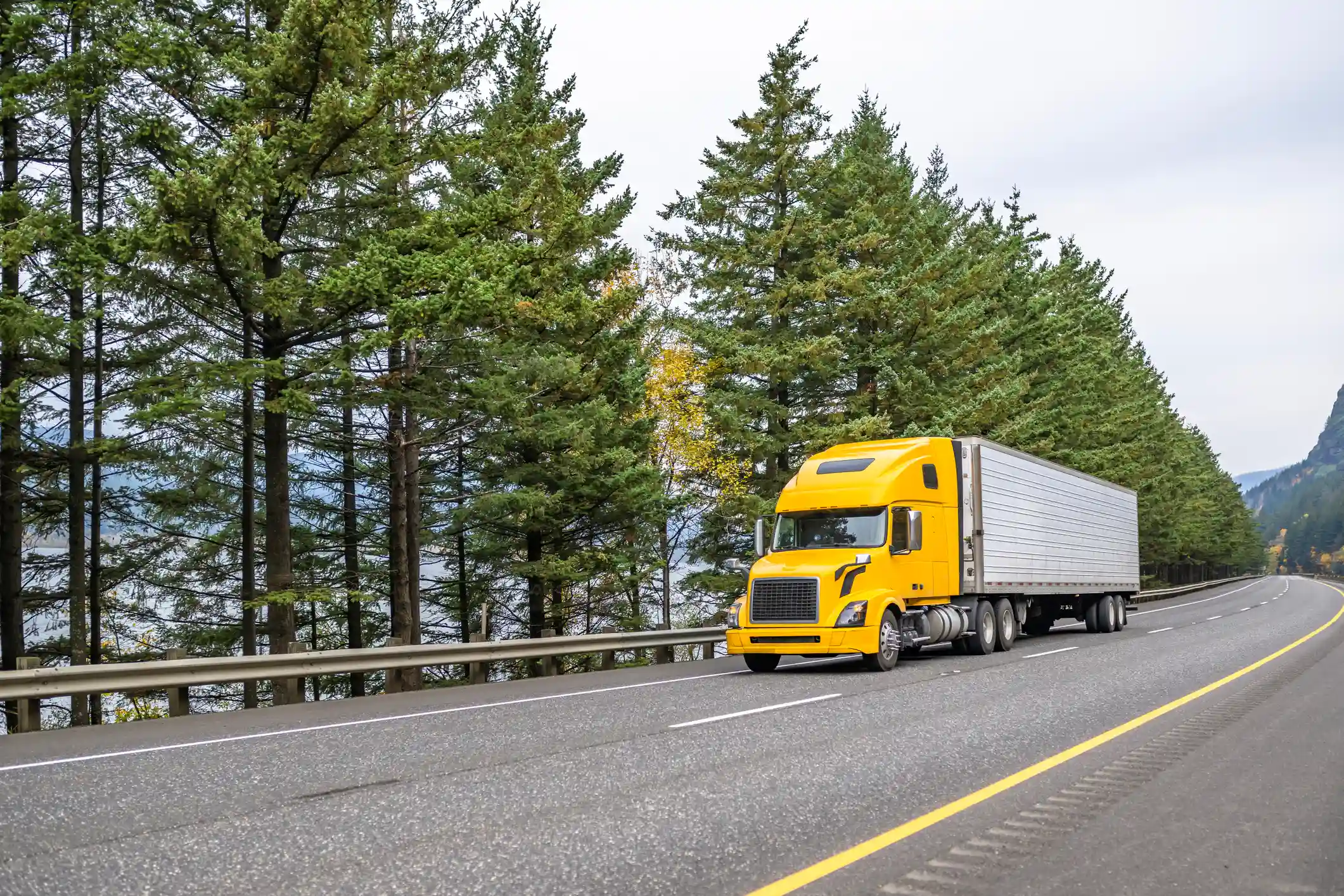
Tractor-trailers—commonly referred to as truck trailer combinations or 18-wheelers—play a central role in freight transportation across the United States. The size, weight, and operating dynamics of these vehicles create elevated liability exposure compared to smaller commercial vehicles, making commercial tractor-trailer insurance a foundational component of risk management.
Due to their weight and extended braking distance, tractor-trailers are typically evaluated as higher-severity commercial auto exposures during underwriting.
Understanding Commercial Tractor-Trailer Insurance
A tractor-trailer combination consists of a powered tractor unit and a semi-trailer connected through a fifth-wheel coupling. Because the semi-trailer lacks a front axle and is supported at the front by the tractor, weight distribution and braking dynamics differ from those of straight trucks.
Collisions involving heavy commercial vehicles are often associated with greater injury severity and property damage, reinforcing the role of auto liability coverage within commercial tractor-trailer insurance programs. This coverage responds to bodily injury and property damage claims arising from the operation of a tractor-trailer.
Under the Federal Motor Carrier Safety Regulations (FMCSRs), interstate motor carriers are required to maintain minimum levels of financial responsibility. For most non-hazardous freight, the federal minimum is $750,000. Higher limits—typically $1,000,000 or $5,000,000—apply when transporting certain hazardous materials.
Liability Requirements for Tractor-Trailer Operations
Collisions involving a tractor-trailer frequently result in elevated injury severity and property damage due to vehicle mass, stopping distance, and impact force. For that reason, truck and trailer insurance programs prioritize liability protection.
Motor carriers operating across multiple jurisdictions must ensure that coverage limits satisfy applicable federal financial responsibility requirements and any additional state or contractual obligations that may apply. Non-compliance with financial responsibility rules may result in enforcement action, including suspension of operating authority.
Accurate vehicle classification, declared cargo type, and proper insurance filings are central components of maintaining compliance. Misclassification of equipment or freight may result in enforcement action, including suspension of operating authority.
For broader insights into FMCSA compliance and risk, see related resources: Understanding FMCSA Regulations for Trucking Companies.
How Much Is Insurance for a Tractor-Trailer
While federal law establishes minimum liability thresholds, underwriting outcomes and overall commercial insurance costs depend on operational characteristics and loss history.
Key factors influencing tractor-trailer insurance costs include:
Driver Qualification Documentation: complete Driver Qualification Files (DQFs), valid medical certifications, and documented motor vehicle record reviews contribute to regulatory alignment and may support more predictable underwriting evaluation over time.
Route Density: Operations concentrated in urban corridors may correlate with higher collision frequency compared to long-haul interstate routes with lower traffic density.
Truck Equipment: brake systems, tire condition, lighting compliance, and load securement practices directly affect inspection outcomes and post-accident evaluations.
Cargo Type: Hazardous materials, high-value freight, or specialized loads introduce additional liability exposure and may require higher financial responsibility limits.
Cost considerations often influence decisions regarding tractor-trailer insurance. Policies structured around minimum required limits may reduce short-term expense; however, they may also increase financial exposure in the event of a high-severity collision. When liability claims exceed selected coverage limits, the motor carrier remains responsible for the difference.
For this reason, some operators evaluate limits beyond the FMCSA minimum financial responsibility requirements, selecting higher combined single limits based on operational profile, contractual obligations, or risk exposure.
Liability Coverage and Additional Insurance Lines
Auto liability remains the regulatory foundation of tractor-trailer insurance. It responds to third-party claims involving bodily injury or property damage.
Additional lines such as physical damage coverage and motor truck cargo insurance address different exposure categories:
Physical damage coverage protects owned equipment against collision, theft, vandalism, or other covered losses.
Motor truck cargo insurance protects freight while in transit, subject to policy terms.
These coverages do not replace mandatory auto liability insurance but contribute to a more comprehensive commercial tractor-trailer insurance structure.
Both physical damage and motor truck cargo coverages are available to STAR Mutual clients through the Reliable Transportation Association (RTA), providing additional capacity and structured protection within the overall insurance program. Further details regarding these coverages are outlined in the related announcements on Physical Damage coverage and Motor Truck Cargo coverage. Please inquire with your insurance agent.
Claims Prevention and Loss Stability in Tractor-Trailer Operations
Claims frequency and severity directly influence long-term insurance stability. Operational practices commonly associated with lower loss volatility include:
Preventive maintenance programs aligned with FMCSA inspection standards,
Structured driver training and onboarding procedures,
Telematics systems monitoring speed, braking behavior, and route patterns,
Periodic insurance program reviews reflecting fleet growth or route adjustments.
Conclusion
Tractor-trailer operations are generally evaluated as a higher-severity liability class within the U.S. transportation sector. Commercial tractor-trailer insurance functions both as a regulatory requirement and as a financial risk management tool. For motor carriers operating tractor-trailer combinations, long-term insurance stability is closely tied to documented safety practices, equipment maintenance, and regulatory compliance across jurisdictions.
STAR Mutual RRG provides commercial auto liability insurance aligned with applicable state regulation and federal transportation requirements, supporting structured risk management within the trucking industry.
Tractor-trailers—commonly referred to as truck trailer combinations or 18-wheelers—play a central role in freight transportation across the United States. The size, weight, and operating dynamics of these vehicles create elevated liability exposure compared to smaller commercial vehicles, making commercial tractor-trailer insurance a foundational component of risk management.
Due to their weight and extended braking distance, tractor-trailers are typically evaluated as higher-severity commercial auto exposures during underwriting.
Understanding Commercial Tractor-Trailer Insurance
A tractor-trailer combination consists of a powered tractor unit and a semi-trailer connected through a fifth-wheel coupling. Because the semi-trailer lacks a front axle and is supported at the front by the tractor, weight distribution and braking dynamics differ from those of straight trucks.
Collisions involving heavy commercial vehicles are often associated with greater injury severity and property damage, reinforcing the role of auto liability coverage within commercial tractor-trailer insurance programs. This coverage responds to bodily injury and property damage claims arising from the operation of a tractor-trailer.
Under the Federal Motor Carrier Safety Regulations (FMCSRs), interstate motor carriers are required to maintain minimum levels of financial responsibility. For most non-hazardous freight, the federal minimum is $750,000. Higher limits—typically $1,000,000 or $5,000,000—apply when transporting certain hazardous materials.
Liability Requirements for Tractor-Trailer Operations
Collisions involving a tractor-trailer frequently result in elevated injury severity and property damage due to vehicle mass, stopping distance, and impact force. For that reason, truck and trailer insurance programs prioritize liability protection.
Motor carriers operating across multiple jurisdictions must ensure that coverage limits satisfy applicable federal financial responsibility requirements and any additional state or contractual obligations that may apply. Non-compliance with financial responsibility rules may result in enforcement action, including suspension of operating authority.
Accurate vehicle classification, declared cargo type, and proper insurance filings are central components of maintaining compliance. Misclassification of equipment or freight may result in enforcement action, including suspension of operating authority.
For broader insights into FMCSA compliance and risk, see related resources: Understanding FMCSA Regulations for Trucking Companies.
How Much Is Insurance for a Tractor-Trailer
While federal law establishes minimum liability thresholds, underwriting outcomes and overall commercial insurance costs depend on operational characteristics and loss history.
Key factors influencing tractor-trailer insurance costs include:
Driver Qualification Documentation: complete Driver Qualification Files (DQFs), valid medical certifications, and documented motor vehicle record reviews contribute to regulatory alignment and may support more predictable underwriting evaluation over time.
Route Density: Operations concentrated in urban corridors may correlate with higher collision frequency compared to long-haul interstate routes with lower traffic density.
Truck Equipment: brake systems, tire condition, lighting compliance, and load securement practices directly affect inspection outcomes and post-accident evaluations.
Cargo Type: Hazardous materials, high-value freight, or specialized loads introduce additional liability exposure and may require higher financial responsibility limits.
Cost considerations often influence decisions regarding tractor-trailer insurance. Policies structured around minimum required limits may reduce short-term expense; however, they may also increase financial exposure in the event of a high-severity collision. When liability claims exceed selected coverage limits, the motor carrier remains responsible for the difference.
For this reason, some operators evaluate limits beyond the FMCSA minimum financial responsibility requirements, selecting higher combined single limits based on operational profile, contractual obligations, or risk exposure.
Liability Coverage and Additional Insurance Lines
Auto liability remains the regulatory foundation of tractor-trailer insurance. It responds to third-party claims involving bodily injury or property damage.
Additional lines such as physical damage coverage and motor truck cargo insurance address different exposure categories:
Physical damage coverage protects owned equipment against collision, theft, vandalism, or other covered losses.
Motor truck cargo insurance protects freight while in transit, subject to policy terms.
These coverages do not replace mandatory auto liability insurance but contribute to a more comprehensive commercial tractor-trailer insurance structure.
Both physical damage and motor truck cargo coverages are available to STAR Mutual clients through the Reliable Transportation Association (RTA), providing additional capacity and structured protection within the overall insurance program. Further details regarding these coverages are outlined in the related announcements on Physical Damage coverage and Motor Truck Cargo coverage. Please inquire with your insurance agent.
Claims Prevention and Loss Stability in Tractor-Trailer Operations
Claims frequency and severity directly influence long-term insurance stability. Operational practices commonly associated with lower loss volatility include:
Preventive maintenance programs aligned with FMCSA inspection standards,
Structured driver training and onboarding procedures,
Telematics systems monitoring speed, braking behavior, and route patterns,
Periodic insurance program reviews reflecting fleet growth or route adjustments.
Conclusion
Tractor-trailer operations are generally evaluated as a higher-severity liability class within the U.S. transportation sector. Commercial tractor-trailer insurance functions both as a regulatory requirement and as a financial risk management tool. For motor carriers operating tractor-trailer combinations, long-term insurance stability is closely tied to documented safety practices, equipment maintenance, and regulatory compliance across jurisdictions.
STAR Mutual RRG provides commercial auto liability insurance aligned with applicable state regulation and federal transportation requirements, supporting structured risk management within the trucking industry.
Contents
Stay up-to-date
Related Post
Become a STAR Agent
Become a STAR Agent
Get access to unparalleled technology-based service to quote and bind your clients in minutes.
Get appointed
Thousands of agents across the United States | Same-day quotes, ready to bind

STAR Mutual Risk Retention Group offers commercial auto liability insurance to the members of Reliable Transportation Association (“RTA”), looking for accessible and reliable coverage.
Contact
855-5MY-STAR (855-569-7827)
STAR Mutual RRG
PO Box 51414, Philadelphia
PA 19115
General inquiries:
Agent inquiries:
Claim inquiries:
The information presented on this website is for general informational purposes only and does not constitute legal, regulatory, or business advice. Readers are encouraged to consult with qualified legal or insurance professionals regarding questions specific to their circumstances.
The content is provided for general informational purposes only and does not constitute an offer to sell, or a solicitation of an offer to buy, insurance in any jurisdiction where STAR Mutual RRG is not licensed or registered. Any description of coverage is general and subject to the terms, conditions, and exclusions of the actual policy.
STAR Mutual Risk Retention Group offers commercial auto liability insurance to the members of Reliable Transportation Association (“RTA”), looking for accessible and reliable coverage.
Contact
855-5MY-STAR (855-569-7827)
STAR Mutual RRG
PO Box 51414, Philadelphia
PA 19115
General inquiries:
Agent inquiries:
Claim inquiries:
The information presented on this website is for general informational purposes only and does not constitute legal, regulatory, or business advice. Readers are encouraged to consult with qualified legal or insurance professionals regarding questions specific to their circumstances.
The content is provided for general informational purposes only and does not constitute an offer to sell, or a solicitation of an offer to buy, insurance in any jurisdiction where STAR Mutual RRG is not licensed or registered. Any description of coverage is general and subject to the terms, conditions, and exclusions of the actual policy.
STAR Mutual Risk Retention Group offers commercial auto liability insurance to the members of Reliable Transportation Association (“RTA”), looking for accessible and reliable coverage.
Contact
855-5MY-STAR (855-569-7827)
STAR Mutual RRG
PO Box 51414, Philadelphia
PA 19115
General inquiries:
Agent inquiries:
Claim inquiries:
The information presented on this website is for general informational purposes only and does not constitute legal, regulatory, or business advice. Readers are encouraged to consult with qualified legal or insurance professionals regarding questions specific to their circumstances.
The content is provided for general informational purposes only and does not constitute an offer to sell, or a solicitation of an offer to buy, insurance in any jurisdiction where STAR Mutual RRG is not licensed or registered. Any description of coverage is general and subject to the terms, conditions, and exclusions of the actual policy.
© 2026 - STAR Mutual RRG. All rights reserved.