How HOS Compliance, CSA Data, and Safety Records Factor Into Commercial Truck Insurance
Hours of Service compliance is one part of a carrier's safety profile. Learn how HOS records enter FMCSA's safety data and why insurers may weigh them alongside other factors when pricing coverage.
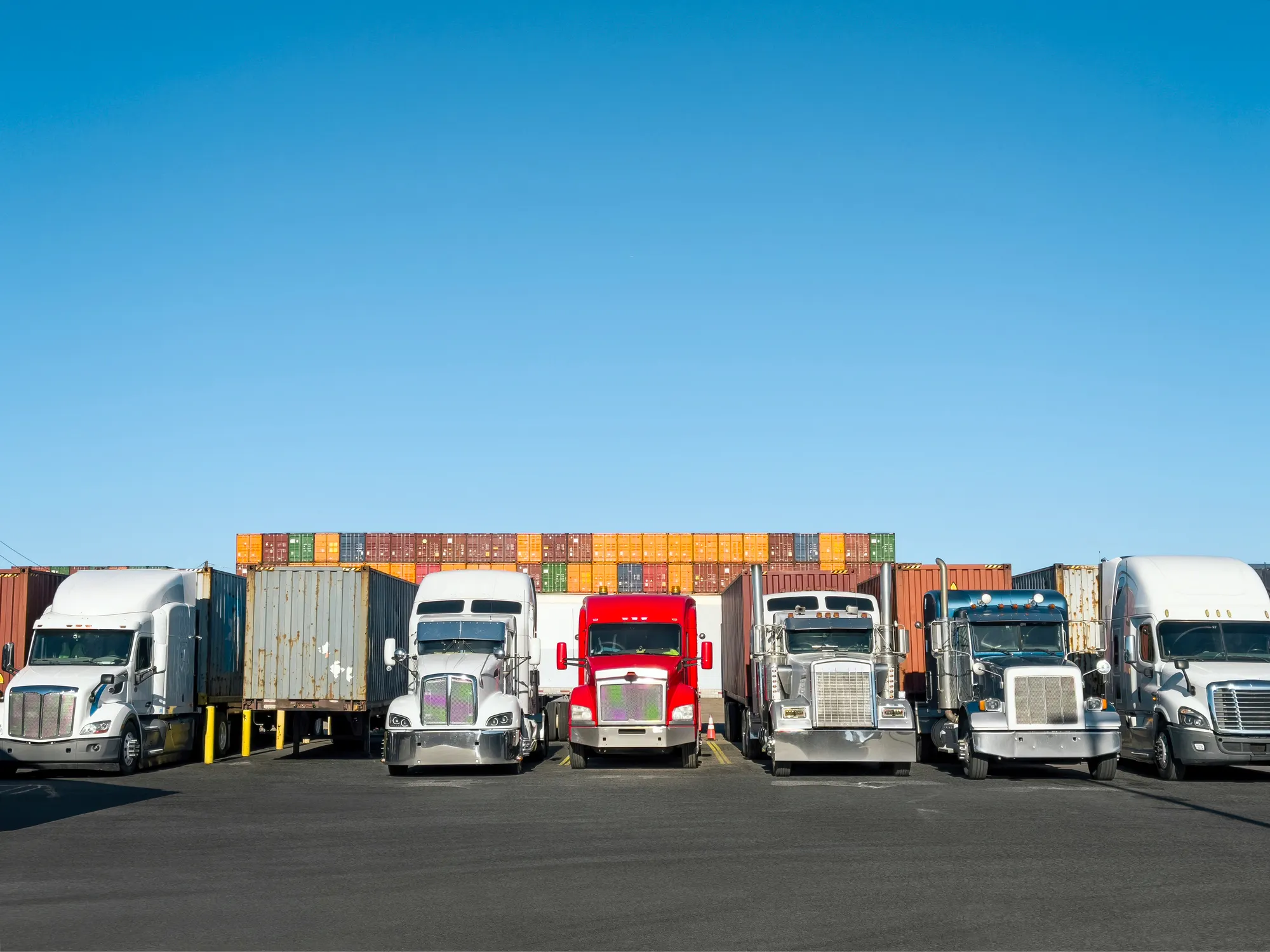
Hours of Service compliance may influence commercial truck insurance because it forms part of the safety data insurers review, but it is one factor among many, not the only thing that shapes price or eligibility.
Hours of Service (HOS) regulations are established and enforced by the Federal Motor Carrier Safety Administration (FMCSA). Insurance pricing is a separate process, one that reflects a range of operational, safety, and business factors.
A transportation carrier's compliance history may be one element that informs that process. At the same time, it is important to distinguish between regulatory compliance and how insurance is priced. An HOS violation does not automatically affect insurance eligibility or premium, and pricing generally reflects the full picture of how an operation runs, not any single event.
What Is Hours of Service Compliance?
Hours of Service compliance means following the federal rules governing driving hours, duty status, and required rest periods.
In practice, it includes:
Operating within applicable HOS limits;
Maintaining accurate records of duty status;
Using an Electronic Logging Device (ELD) where required.
Together, these practices form the basis of consistent HOS compliance across day-to-day operations.
How HOS Records Reach a Safety Profile: The CSA System
HOS violations reach a carrier's safety profile through FMCSA's Compliance, Safety, Accountability (CSA) program, which organizes roadside inspection, violation, and crash data into scored safety categories.
Roadside inspections are only the starting point. Hours of Service violations become part of FMCSA's CSA program through the Safety Measurement System (SMS), which organizes inspection, violation, and crash data into seven categories called Behavior Analysis and Safety Improvement Categories, or BASICs.
Hours-of-Service violations feed the HOS Compliance BASIC. Each BASIC measures a different area of safety performance using inspection and violation data, measured on a scale of 0 to 100, where a lower number indicates better relative performance. The system draws on a rolling 24-month window of data and is updated monthly.
Two factors determine how much a given violation counts:
Severity: how serious the violation is within its category.
Time: how recently it occurred.
Recent violations generally have a greater influence than older ones. Under the SMS methodology, a violation from the past six months counts three times, one from six months to a year counts twice, and one from a year to two years counts once. After two years, a violation no longer counts in the SMS at all. A safety profile therefore reflects a recent, moving pattern rather than a permanent mark.
Not all SMS information is publicly available. Some safety data can be viewed by anyone, while additional details are available only to the carrier through FMCSA’s secure portal.
Reviewing a Carrier's Own Safety Data
Carriers can review their own safety data at any time through FMCSA's Safety Measurement System, using either a public view or a secure carrier login. Reviewing this information periodically may help carriers identify trends, verify the accuracy of inspection data, and better understand their publicly available safety profile. It can be viewed two ways:
The public view shows the public BASIC percentiles and general inspection counts. This is the same view that brokers, shippers, and insurers can see.
The carrier login view shows the complete profile, including detailed violation records, severity and time weights, individual inspection reports, and the BASICs hidden from public display.
A carrier's SMS data is available through FMCSA's Safety Measurement System. Where a record appears to contain an error, FMCSA's DataQs system provides a formal process to request a review of the data.
Why Different Violations Carry Different Weight
Not every HOS violation represents the same kind of concern. They fall along a spectrum:
Administrative or paperwork issues (such as a form-and-manner error on an ELD log) are the lightest. The hours themselves may be fully compliant; only the record is incomplete.
Procedural omissions (such as failing to review and certify a log) reflect a missed step rather than active wrongdoing.
Operating-limit violations (such as driving beyond the 11-hour or 14-hour limit) are more significant, because a defined limit was exceeded in operation.
Falsification (particularly a false record that appears intended to hide hours) is treated as the most serious, because it raises a question about the record's accuracy rather than the hours alone.
For this reason, a safety profile reflects more than the number of violations. The nature, severity, and context of each event also contribute to the overall picture.
How Safety Information May Factor Into Insurance Pricing
Beyond regulatory data, a range of operational and safety information may factor into insurance pricing, including:
Inspection history: the record of roadside inspections over time;
HOS-related violations: any hours or logbook violations on the record;
CSA Safety Measurement System data, where applicable;
Crash history: past incidents and their circumstances;
Fleet safety management practices: the systems a carrier uses to manage risk.
The relative importance of each factor varies among insurers and insurance programs. Rather than relying on a single metric, pricing typically reflects the overall operating profile of the carrier.
HOS Compliance as Part of a Broader Safety Profile
Hours of Service compliance represents one element of a carrier's broader operational and safety profile. Beyond the safety data itself, broader business factors also come into play, such as:
years in business;
prior claims history;
vehicle type and value;
cargo being transported;
operating radius;
driver experience;
fleet size and composition;
maintenance and safety programs.
In other words, HOS compliance is one signal among several, not the whole story. A consistent record across multiple areas generally provides a more complete picture of how a trucking operation is managed.
Differences Between Owner-Operators and Fleets
How compliance shows up can differ depending on the size of the operation:
Owner-Operators
Because an owner-operator’s operating history typically reflects a single driver, individual inspections and compliance records may represent a larger share of the overall safety profile than they would for a larger fleet.
Fleets
For a larger fleet, a single inspection may carry less weight relative to the overall record. What matters more is whether training and procedures hold up consistently across all the drivers—things like control processes, driver training, and internal safety steps.
How HOS Data Connects to Claims
The same records that shape a safety profile can also matter after an incident. ELD and telematics data document duty status, movement, and timing, which may provide objective operational data that helps clarify the circumstances of a claim.
Read more about the use of the data in a related article, How Telematics and Cameras Help Resolve Fraudulent Claims in Trucking. Accurate HOS records, in other words, may serve a transportation carrier's interests well beyond the roadside inspection.
Why Consistent Compliance Matters
Consistent Hours of Service compliance supports more than regulatory requirements. It helps keep records accurate, day-to-day operations consistent, and gives a clearer view of how the operation runs over time.
From an insurance perspective, compliance records may also provide additional context by contributing to a carrier's broader safety profile alongside other operational factors.
Frequently Asked Questions About HOS Compliance and Truck Insurance
Does a single HOS violation raise insurance premiums?
Not necessarily. Insurance pricing reflects many factors together: inspection history, crash history, experience, and vehicle type, with HOS compliance only one of them. A single violation is considered in the context of the overall operating profile rather than as a standalone trigger.
How long does an HOS violation stay on a safety record?
Within FMCSA's Safety Measurement System, violations are counted for 24 months and weighted by recency. A violation from the past six months counts most heavily, and its weight decreases over time. After two years, it no longer counts in the SMS.
Can a motor carrier see its own safety data?
Yes. Every carrier with a USDOT number has an SMS profile. A public view shows the public BASIC percentiles, and a secure carrier login shows the complete profile, including detailed violation and inspection data. Both are available through FMCSA's Safety Measurement System.
What can be done about an error in the record?
FMCSA's DataQs system provides a formal process to request a review of data that appears to be incorrect, such as an inspection or violation attributed in error.
Are owner-operators and fleets assessed the same way?
The same categories of information apply, but the emphasis differs. An owner-operator's profile centers on individual operating history, where a single event may be more visible; a fleet's profile reflects systems, training, and consistency across many drivers.
Conclusion
Hours of Service regulations, Electronic Logging Devices, and accurate recordkeeping work together to support safe, consistent, and well-documented trucking operations.
While insurers consider a wide range of operational factors when pricing coverage, HOS compliance provides valuable context as part of a carrier's broader safety profile rather than serving as a standalone measure of risk.
STAR Mutual RRG is a risk retention group providing commercial auto liability insurance to trucking and transportation operations across multiple states.
This article is provided for general informational and educational purposes only and does not constitute legal, regulatory, or insurance advice. Insurance pricing and coverage decisions depend on the specific facts of each operation and vary among insurers and programs. Regulatory requirements referenced here are subject to change. Questions about a specific operation are best directed to qualified legal, regulatory, or insurance professionals.
Hours of Service compliance may influence commercial truck insurance because it forms part of the safety data insurers review, but it is one factor among many, not the only thing that shapes price or eligibility.
Hours of Service (HOS) regulations are established and enforced by the Federal Motor Carrier Safety Administration (FMCSA). Insurance pricing is a separate process, one that reflects a range of operational, safety, and business factors.
A transportation carrier's compliance history may be one element that informs that process. At the same time, it is important to distinguish between regulatory compliance and how insurance is priced. An HOS violation does not automatically affect insurance eligibility or premium, and pricing generally reflects the full picture of how an operation runs, not any single event.
What Is Hours of Service Compliance?
Hours of Service compliance means following the federal rules governing driving hours, duty status, and required rest periods.
In practice, it includes:
Operating within applicable HOS limits;
Maintaining accurate records of duty status;
Using an Electronic Logging Device (ELD) where required.
Together, these practices form the basis of consistent HOS compliance across day-to-day operations.
How HOS Records Reach a Safety Profile: The CSA System
HOS violations reach a carrier's safety profile through FMCSA's Compliance, Safety, Accountability (CSA) program, which organizes roadside inspection, violation, and crash data into scored safety categories.
Roadside inspections are only the starting point. Hours of Service violations become part of FMCSA's CSA program through the Safety Measurement System (SMS), which organizes inspection, violation, and crash data into seven categories called Behavior Analysis and Safety Improvement Categories, or BASICs.
Hours-of-Service violations feed the HOS Compliance BASIC. Each BASIC measures a different area of safety performance using inspection and violation data, measured on a scale of 0 to 100, where a lower number indicates better relative performance. The system draws on a rolling 24-month window of data and is updated monthly.
Two factors determine how much a given violation counts:
Severity: how serious the violation is within its category.
Time: how recently it occurred.
Recent violations generally have a greater influence than older ones. Under the SMS methodology, a violation from the past six months counts three times, one from six months to a year counts twice, and one from a year to two years counts once. After two years, a violation no longer counts in the SMS at all. A safety profile therefore reflects a recent, moving pattern rather than a permanent mark.
Not all SMS information is publicly available. Some safety data can be viewed by anyone, while additional details are available only to the carrier through FMCSA’s secure portal.
Reviewing a Carrier's Own Safety Data
Carriers can review their own safety data at any time through FMCSA's Safety Measurement System, using either a public view or a secure carrier login. Reviewing this information periodically may help carriers identify trends, verify the accuracy of inspection data, and better understand their publicly available safety profile. It can be viewed two ways:
The public view shows the public BASIC percentiles and general inspection counts. This is the same view that brokers, shippers, and insurers can see.
The carrier login view shows the complete profile, including detailed violation records, severity and time weights, individual inspection reports, and the BASICs hidden from public display.
A carrier's SMS data is available through FMCSA's Safety Measurement System. Where a record appears to contain an error, FMCSA's DataQs system provides a formal process to request a review of the data.
Why Different Violations Carry Different Weight
Not every HOS violation represents the same kind of concern. They fall along a spectrum:
Administrative or paperwork issues (such as a form-and-manner error on an ELD log) are the lightest. The hours themselves may be fully compliant; only the record is incomplete.
Procedural omissions (such as failing to review and certify a log) reflect a missed step rather than active wrongdoing.
Operating-limit violations (such as driving beyond the 11-hour or 14-hour limit) are more significant, because a defined limit was exceeded in operation.
Falsification (particularly a false record that appears intended to hide hours) is treated as the most serious, because it raises a question about the record's accuracy rather than the hours alone.
For this reason, a safety profile reflects more than the number of violations. The nature, severity, and context of each event also contribute to the overall picture.
How Safety Information May Factor Into Insurance Pricing
Beyond regulatory data, a range of operational and safety information may factor into insurance pricing, including:
Inspection history: the record of roadside inspections over time;
HOS-related violations: any hours or logbook violations on the record;
CSA Safety Measurement System data, where applicable;
Crash history: past incidents and their circumstances;
Fleet safety management practices: the systems a carrier uses to manage risk.
The relative importance of each factor varies among insurers and insurance programs. Rather than relying on a single metric, pricing typically reflects the overall operating profile of the carrier.
HOS Compliance as Part of a Broader Safety Profile
Hours of Service compliance represents one element of a carrier's broader operational and safety profile. Beyond the safety data itself, broader business factors also come into play, such as:
years in business;
prior claims history;
vehicle type and value;
cargo being transported;
operating radius;
driver experience;
fleet size and composition;
maintenance and safety programs.
In other words, HOS compliance is one signal among several, not the whole story. A consistent record across multiple areas generally provides a more complete picture of how a trucking operation is managed.
Differences Between Owner-Operators and Fleets
How compliance shows up can differ depending on the size of the operation:
Owner-Operators
Because an owner-operator’s operating history typically reflects a single driver, individual inspections and compliance records may represent a larger share of the overall safety profile than they would for a larger fleet.
Fleets
For a larger fleet, a single inspection may carry less weight relative to the overall record. What matters more is whether training and procedures hold up consistently across all the drivers—things like control processes, driver training, and internal safety steps.
How HOS Data Connects to Claims
The same records that shape a safety profile can also matter after an incident. ELD and telematics data document duty status, movement, and timing, which may provide objective operational data that helps clarify the circumstances of a claim.
Read more about the use of the data in a related article, How Telematics and Cameras Help Resolve Fraudulent Claims in Trucking. Accurate HOS records, in other words, may serve a transportation carrier's interests well beyond the roadside inspection.
Why Consistent Compliance Matters
Consistent Hours of Service compliance supports more than regulatory requirements. It helps keep records accurate, day-to-day operations consistent, and gives a clearer view of how the operation runs over time.
From an insurance perspective, compliance records may also provide additional context by contributing to a carrier's broader safety profile alongside other operational factors.
Frequently Asked Questions About HOS Compliance and Truck Insurance
Does a single HOS violation raise insurance premiums?
Not necessarily. Insurance pricing reflects many factors together: inspection history, crash history, experience, and vehicle type, with HOS compliance only one of them. A single violation is considered in the context of the overall operating profile rather than as a standalone trigger.
How long does an HOS violation stay on a safety record?
Within FMCSA's Safety Measurement System, violations are counted for 24 months and weighted by recency. A violation from the past six months counts most heavily, and its weight decreases over time. After two years, it no longer counts in the SMS.
Can a motor carrier see its own safety data?
Yes. Every carrier with a USDOT number has an SMS profile. A public view shows the public BASIC percentiles, and a secure carrier login shows the complete profile, including detailed violation and inspection data. Both are available through FMCSA's Safety Measurement System.
What can be done about an error in the record?
FMCSA's DataQs system provides a formal process to request a review of data that appears to be incorrect, such as an inspection or violation attributed in error.
Are owner-operators and fleets assessed the same way?
The same categories of information apply, but the emphasis differs. An owner-operator's profile centers on individual operating history, where a single event may be more visible; a fleet's profile reflects systems, training, and consistency across many drivers.
Conclusion
Hours of Service regulations, Electronic Logging Devices, and accurate recordkeeping work together to support safe, consistent, and well-documented trucking operations.
While insurers consider a wide range of operational factors when pricing coverage, HOS compliance provides valuable context as part of a carrier's broader safety profile rather than serving as a standalone measure of risk.
STAR Mutual RRG is a risk retention group providing commercial auto liability insurance to trucking and transportation operations across multiple states.
This article is provided for general informational and educational purposes only and does not constitute legal, regulatory, or insurance advice. Insurance pricing and coverage decisions depend on the specific facts of each operation and vary among insurers and programs. Regulatory requirements referenced here are subject to change. Questions about a specific operation are best directed to qualified legal, regulatory, or insurance professionals.
Contents
Stay up-to-date
Related Post


Aug 24, 2026
Become a STAR Agent
Become a STAR Agent
Get access to unparalleled technology-based service to quote and bind your clients in minutes.
Get appointed
Thousands of agents across the United States | Same-day quotes, ready to bind

STAR Mutual Risk Retention Group offers commercial auto liability insurance to the members of Reliable Transportation Association (“RTA”), looking for accessible and reliable coverage.
Contact
855-5MY-STAR (855-569-7827)
STAR Mutual RRG
PO Box 51414, Philadelphia
PA 19115
General inquiries:
Agent inquiries:
Claim inquiries:
The information presented on this website is for general informational purposes only and does not constitute legal, regulatory, or business advice. Readers are encouraged to consult with qualified legal or insurance professionals regarding questions specific to their circumstances.
The content is provided for general informational purposes only and does not constitute an offer to sell, or a solicitation of an offer to buy, insurance in any jurisdiction where STAR Mutual RRG is not licensed or registered. Any description of coverage is general and subject to the terms, conditions, and exclusions of the actual policy.
STAR Mutual Risk Retention Group offers commercial auto liability insurance to the members of Reliable Transportation Association (“RTA”), looking for accessible and reliable coverage.
Contact
855-5MY-STAR (855-569-7827)
STAR Mutual RRG
PO Box 51414, Philadelphia
PA 19115
General inquiries:
Agent inquiries:
Claim inquiries:
The information presented on this website is for general informational purposes only and does not constitute legal, regulatory, or business advice. Readers are encouraged to consult with qualified legal or insurance professionals regarding questions specific to their circumstances.
The content is provided for general informational purposes only and does not constitute an offer to sell, or a solicitation of an offer to buy, insurance in any jurisdiction where STAR Mutual RRG is not licensed or registered. Any description of coverage is general and subject to the terms, conditions, and exclusions of the actual policy.
STAR Mutual Risk Retention Group offers commercial auto liability insurance to the members of Reliable Transportation Association (“RTA”), looking for accessible and reliable coverage.
Contact
855-5MY-STAR (855-569-7827)
STAR Mutual RRG
PO Box 51414, Philadelphia
PA 19115
General inquiries:
Agent inquiries:
Claim inquiries:
The information presented on this website is for general informational purposes only and does not constitute legal, regulatory, or business advice. Readers are encouraged to consult with qualified legal or insurance professionals regarding questions specific to their circumstances.
The content is provided for general informational purposes only and does not constitute an offer to sell, or a solicitation of an offer to buy, insurance in any jurisdiction where STAR Mutual RRG is not licensed or registered. Any description of coverage is general and subject to the terms, conditions, and exclusions of the actual policy.
© 2026 - STAR Mutual RRG. All rights reserved.