National Truck Driver Appreciation Week 2026: The Work Behind Every Mile
National Truck Driver Appreciation Week returns September 13–19, 2026. A look at how the industry it honors is changing—fuel, technology, regulation—and why the recognition still matters.
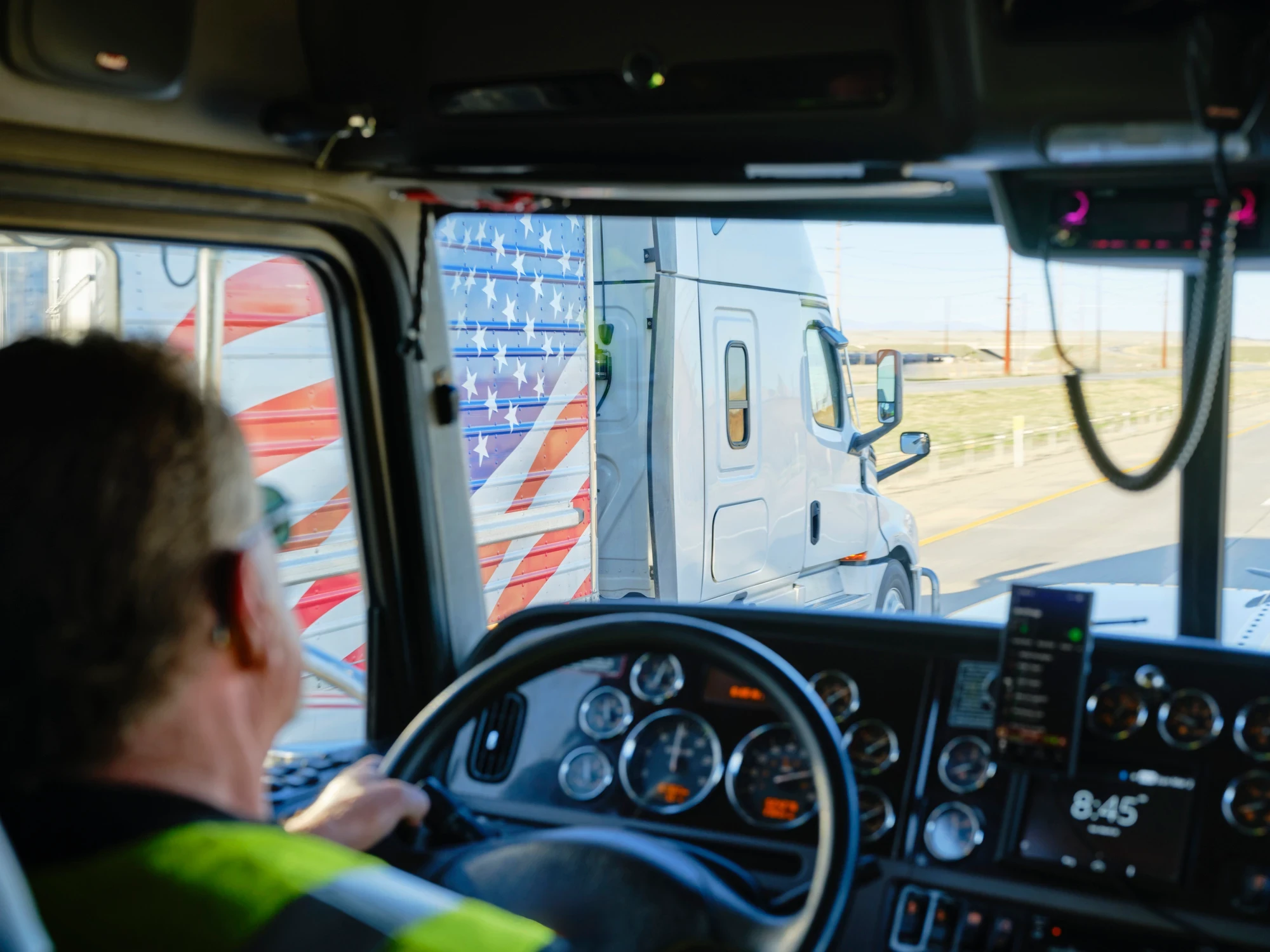
Nearly every product on a store shelf, in a hospital, or on a job site arrived by truck—and a professional driver moved it there. Trucks carry the food, medical supplies, equipment, materials, and consumer goods that keep businesses running and communities supplied, and professional drivers are responsible for moving that freight safely and reliably, often through long hours and changing road, weather, and traffic conditions.
In 2026, National Truck Driver Appreciation Week takes place September 13–19. For one week, the industry pauses to recognize its drivers. The work behind that recognition, though, continues every day of the year.
Trucking by the Numbers
Roughly 3.6 million professional truck drivers work across the United States, moving the overwhelming majority of the nation's freight.
In 2024, trucks hauled 11.27 billion tons of freight—more than 72% of the nation's total domestic freight tonnage—according to the American Trucking Associations' 2025 edition of American Trucking Trends. More than 80% of U.S. communities rely exclusively on trucks to meet their freight transportation needs, with no rail or barge alternative.
Behind those figures are individual drivers making the miles that connect manufacturers, farms, warehouses, businesses, hospitals, retailers, and households. The numbers explain the scale of trucking. They do not fully capture the work required to keep it moving safely.
What Is National Truck Driver Appreciation Week?
National Truck Driver Appreciation Week (NTDAW) is an annual nationwide observance dedicated to recognizing the contributions of professional truck drivers.
The American Trucking Associations (ATA) launched the observance in the late 1980s to highlight the important role truck drivers play in the U.S. economy and in everyday life. Nearly four decades later, NTDAW has become a regular part of the trucking industry’s calendar, with motor carriers, trucking associations, industry suppliers, and communities organizing meals, recognition events, social campaigns, and other ways to thank drivers.
The purpose remains straightforward: to recognize the people whose work helps businesses, communities, and supply chains stay connected.
Why the Work Behind the Freight Matters
When NTDAW began in the late 1980s, the importance of trucking was already enormous. But much of the work happened out of public view.
Professional drivers spent long periods on the road, managed demanding schedules, and worked through changing weather and road conditions to deliver freight across the country. Over time, the public has gained a greater understanding of how much everyday life depends on reliable freight transportation.
The supply-chain disruptions of recent years brought that connection into sharper focus. Delays and shortages demonstrated how closely transportation is linked to businesses, communities, and consumers.
Today, shippers and consumers have more visibility into where freight is and when it is expected to arrive. Behind that visibility, however, the work of moving freight safely still depends on professional drivers and the people who support their operations.
The Operating Environment in 2026
The modern truck looks very different from the truck of several decades ago, and so does the way drivers and motor carriers manage daily operations. Electronic logging devices help record driving time and manage hours-of-service records, while telematics, navigation systems, cameras, and dispatch platforms give drivers and motor carriers more real-time information than ever before.
But better tools do not remove the responsibility that comes with operating a commercial vehicle. Drivers are still responsible for making decisions in real-world conditions—navigating traffic, managing changing weather and road conditions, maintaining awareness around other vehicles, and operating safely within regulatory requirements.
This year’s appreciation week comes during a particularly demanding period for the transportation industry—one shaped by technology and regulation as much as by economics.
Rising fuel costs
Fuel remains one of the most visible pressures on trucking operations. In September 2026, U.S. diesel prices reached record levels, with the AAA national average surpassing $6.00 per gallon for the first time and reaching roughly $6.23 as of September 14, 2026. The increase has been linked to disruptions in global fuel supplies and has placed additional pressure on trucking, agriculture, and other diesel-dependent industries.
For professional drivers and smaller fleets, fuel volatility is more than a market statistic. It is part of the operating environment behind every mile.
More complex compliance requirements
Drivers and motor carriers are also navigating an evolving regulatory environment.
The Federal Motor Carrier Safety Administration continues to update and enforce requirements around electronic logging devices. In 2026, FMCSA removed multiple ELDs from its list of registered devices after determining that they did not meet the minimum requirements set in federal regulation (49 CFR Part 395). When a device is revoked, motor carriers have 60 days to replace it with a compliant ELD. Motor carriers that continue to use a revoked device after its enforcement date are treated as operating without an ELD, and drivers may be placed out of service under Commercial Vehicle Safety Alliance criteria.
An industry adapting to change
The transportation industry is also adapting to changing freight conditions, operating costs, workforce dynamics, and expectations around safety.
For drivers, that means the job continues to require more than technical driving skills. It requires judgment, attention, patience, adaptability, and a consistent commitment to safety.
Respect for Drivers Starts With Safety
Saying thank you to professional drivers is important. Supporting the conditions that help them operate safely is even more meaningful.
Safety does not depend on the driver alone. It is influenced by equipment maintenance, training, realistic schedules, route planning, compliance practices, communication, and the decisions made throughout the operation.
For safety-first motor carriers and fleets, appreciation is therefore not limited to one week in September—it can be reflected in the everyday choices that help drivers do their jobs safely and return home to their families. The same principle applies to everyone who shares the road.
For motor carriers and fleet owners, appreciation might mean recognizing safe driving, listening to driver feedback, prioritizing equipment maintenance, and creating operating practices that respect the realities of the road.
For shippers and brokers, it can mean respecting drivers’ time, communicating clearly, improving loading and unloading processes, and providing safe facilities.
For everyone sharing the road, it can be as simple as giving commercial vehicles enough space to maneuver, staying out of blind spots, staying focused, and allowing additional stopping distance. ATA specifically highlights these behaviors as ways the motoring public can support truck drivers and improve highway safety.
These actions may seem small. Collectively, they help create an environment where professional drivers can do their jobs safely and effectively.
More Than Miles
Every day, professional truck drivers move more than freight. They move food to communities, medicine to hospitals, materials to construction sites, equipment to businesses, and products to the people who depend on them.
They connect places hundreds or thousands of miles apart, and they do it through changing weather, traffic, regulations, fuel costs, and the many unpredictable situations that come with life on the road. National Truck Driver Appreciation Week gives the industry a moment to pause and recognize that contribution—the skill, responsibility, and discipline behind every safe mile.
That recognition is also a reminder that a strong transportation industry is built around people who take safety seriously and the operations that support them. STAR Mutual RRG, a member-owned risk retention group, provides commercial auto liability coverage to trucking and transportation operations built on that foundation.
The drivers who keep freight moving, keep communities supplied, and help move America forward earn that respect well beyond September 13–19.
Nearly every product on a store shelf, in a hospital, or on a job site arrived by truck—and a professional driver moved it there. Trucks carry the food, medical supplies, equipment, materials, and consumer goods that keep businesses running and communities supplied, and professional drivers are responsible for moving that freight safely and reliably, often through long hours and changing road, weather, and traffic conditions.
In 2026, National Truck Driver Appreciation Week takes place September 13–19. For one week, the industry pauses to recognize its drivers. The work behind that recognition, though, continues every day of the year.
Trucking by the Numbers
Roughly 3.6 million professional truck drivers work across the United States, moving the overwhelming majority of the nation's freight.
In 2024, trucks hauled 11.27 billion tons of freight—more than 72% of the nation's total domestic freight tonnage—according to the American Trucking Associations' 2025 edition of American Trucking Trends. More than 80% of U.S. communities rely exclusively on trucks to meet their freight transportation needs, with no rail or barge alternative.
Behind those figures are individual drivers making the miles that connect manufacturers, farms, warehouses, businesses, hospitals, retailers, and households. The numbers explain the scale of trucking. They do not fully capture the work required to keep it moving safely.
What Is National Truck Driver Appreciation Week?
National Truck Driver Appreciation Week (NTDAW) is an annual nationwide observance dedicated to recognizing the contributions of professional truck drivers.
The American Trucking Associations (ATA) launched the observance in the late 1980s to highlight the important role truck drivers play in the U.S. economy and in everyday life. Nearly four decades later, NTDAW has become a regular part of the trucking industry’s calendar, with motor carriers, trucking associations, industry suppliers, and communities organizing meals, recognition events, social campaigns, and other ways to thank drivers.
The purpose remains straightforward: to recognize the people whose work helps businesses, communities, and supply chains stay connected.
Why the Work Behind the Freight Matters
When NTDAW began in the late 1980s, the importance of trucking was already enormous. But much of the work happened out of public view.
Professional drivers spent long periods on the road, managed demanding schedules, and worked through changing weather and road conditions to deliver freight across the country. Over time, the public has gained a greater understanding of how much everyday life depends on reliable freight transportation.
The supply-chain disruptions of recent years brought that connection into sharper focus. Delays and shortages demonstrated how closely transportation is linked to businesses, communities, and consumers.
Today, shippers and consumers have more visibility into where freight is and when it is expected to arrive. Behind that visibility, however, the work of moving freight safely still depends on professional drivers and the people who support their operations.
The Operating Environment in 2026
The modern truck looks very different from the truck of several decades ago, and so does the way drivers and motor carriers manage daily operations. Electronic logging devices help record driving time and manage hours-of-service records, while telematics, navigation systems, cameras, and dispatch platforms give drivers and motor carriers more real-time information than ever before.
But better tools do not remove the responsibility that comes with operating a commercial vehicle. Drivers are still responsible for making decisions in real-world conditions—navigating traffic, managing changing weather and road conditions, maintaining awareness around other vehicles, and operating safely within regulatory requirements.
This year’s appreciation week comes during a particularly demanding period for the transportation industry—one shaped by technology and regulation as much as by economics.
Rising fuel costs
Fuel remains one of the most visible pressures on trucking operations. In September 2026, U.S. diesel prices reached record levels, with the AAA national average surpassing $6.00 per gallon for the first time and reaching roughly $6.23 as of September 14, 2026. The increase has been linked to disruptions in global fuel supplies and has placed additional pressure on trucking, agriculture, and other diesel-dependent industries.
For professional drivers and smaller fleets, fuel volatility is more than a market statistic. It is part of the operating environment behind every mile.
More complex compliance requirements
Drivers and motor carriers are also navigating an evolving regulatory environment.
The Federal Motor Carrier Safety Administration continues to update and enforce requirements around electronic logging devices. In 2026, FMCSA removed multiple ELDs from its list of registered devices after determining that they did not meet the minimum requirements set in federal regulation (49 CFR Part 395). When a device is revoked, motor carriers have 60 days to replace it with a compliant ELD. Motor carriers that continue to use a revoked device after its enforcement date are treated as operating without an ELD, and drivers may be placed out of service under Commercial Vehicle Safety Alliance criteria.
An industry adapting to change
The transportation industry is also adapting to changing freight conditions, operating costs, workforce dynamics, and expectations around safety.
For drivers, that means the job continues to require more than technical driving skills. It requires judgment, attention, patience, adaptability, and a consistent commitment to safety.
Respect for Drivers Starts With Safety
Saying thank you to professional drivers is important. Supporting the conditions that help them operate safely is even more meaningful.
Safety does not depend on the driver alone. It is influenced by equipment maintenance, training, realistic schedules, route planning, compliance practices, communication, and the decisions made throughout the operation.
For safety-first motor carriers and fleets, appreciation is therefore not limited to one week in September—it can be reflected in the everyday choices that help drivers do their jobs safely and return home to their families. The same principle applies to everyone who shares the road.
For motor carriers and fleet owners, appreciation might mean recognizing safe driving, listening to driver feedback, prioritizing equipment maintenance, and creating operating practices that respect the realities of the road.
For shippers and brokers, it can mean respecting drivers’ time, communicating clearly, improving loading and unloading processes, and providing safe facilities.
For everyone sharing the road, it can be as simple as giving commercial vehicles enough space to maneuver, staying out of blind spots, staying focused, and allowing additional stopping distance. ATA specifically highlights these behaviors as ways the motoring public can support truck drivers and improve highway safety.
These actions may seem small. Collectively, they help create an environment where professional drivers can do their jobs safely and effectively.
More Than Miles
Every day, professional truck drivers move more than freight. They move food to communities, medicine to hospitals, materials to construction sites, equipment to businesses, and products to the people who depend on them.
They connect places hundreds or thousands of miles apart, and they do it through changing weather, traffic, regulations, fuel costs, and the many unpredictable situations that come with life on the road. National Truck Driver Appreciation Week gives the industry a moment to pause and recognize that contribution—the skill, responsibility, and discipline behind every safe mile.
That recognition is also a reminder that a strong transportation industry is built around people who take safety seriously and the operations that support them. STAR Mutual RRG, a member-owned risk retention group, provides commercial auto liability coverage to trucking and transportation operations built on that foundation.
The drivers who keep freight moving, keep communities supplied, and help move America forward earn that respect well beyond September 13–19.
Contents
Stay up-to-date
Related Post

Aug 24, 2026
Become a STAR Agent
Become a STAR Agent
Get access to unparalleled technology-based service to quote and bind your clients in minutes.
Get appointed

STAR Mutual Risk Retention Group offers commercial auto liability insurance to the members of Reliable Transportation Association (“RTA”), looking for accessible and reliable coverage.
Get in Touch
Contact
855-5MY-STAR (855-569-7827)
STAR Mutual RRG
PO Box 51414, Philadelphia
PA 19115
General inquiries:
Agent inquiries:
Claim inquiries:
The information presented on this website is for general informational purposes only and does not constitute legal, regulatory, or business advice. Readers are encouraged to consult with qualified legal or insurance professionals regarding questions specific to their circumstances.
The content is provided for general informational purposes only and does not constitute an offer to sell, or a solicitation of an offer to buy, insurance in any jurisdiction where STAR Mutual RRG is not licensed or registered. Any description of coverage is general and subject to the terms, conditions, and exclusions of the actual policy.
STAR Mutual Risk Retention Group offers commercial auto liability insurance to the members of Reliable Transportation Association (“RTA”), looking for accessible and reliable coverage.
Get in Touch
Contact
855-5MY-STAR (855-569-7827)
STAR Mutual RRG
PO Box 51414, Philadelphia
PA 19115
General inquiries:
Agent inquiries:
Claim inquiries:
The information presented on this website is for general informational purposes only and does not constitute legal, regulatory, or business advice. Readers are encouraged to consult with qualified legal or insurance professionals regarding questions specific to their circumstances.
The content is provided for general informational purposes only and does not constitute an offer to sell, or a solicitation of an offer to buy, insurance in any jurisdiction where STAR Mutual RRG is not licensed or registered. Any description of coverage is general and subject to the terms, conditions, and exclusions of the actual policy.
STAR Mutual Risk Retention Group offers commercial auto liability insurance to the members of Reliable Transportation Association (“RTA”), looking for accessible and reliable coverage.
Get in Touch
Contact
855-5MY-STAR (855-569-7827)
STAR Mutual RRG
PO Box 51414, Philadelphia
PA 19115
General inquiries:
Agent inquiries:
Claim inquiries:
The information presented on this website is for general informational purposes only and does not constitute legal, regulatory, or business advice. Readers are encouraged to consult with qualified legal or insurance professionals regarding questions specific to their circumstances.
The content is provided for general informational purposes only and does not constitute an offer to sell, or a solicitation of an offer to buy, insurance in any jurisdiction where STAR Mutual RRG is not licensed or registered. Any description of coverage is general and subject to the terms, conditions, and exclusions of the actual policy.
© 2026 - STAR Mutual RRG. All rights reserved.