The Iran Conflict and Diesel Prices: What Trucking Operators Need to Know
Diesel prices jumped after disruptions near the Strait of Hormuz. Learn how rising fuel costs affect trucking operations, freight markets, and insurance risk for fleets and owner-operators.
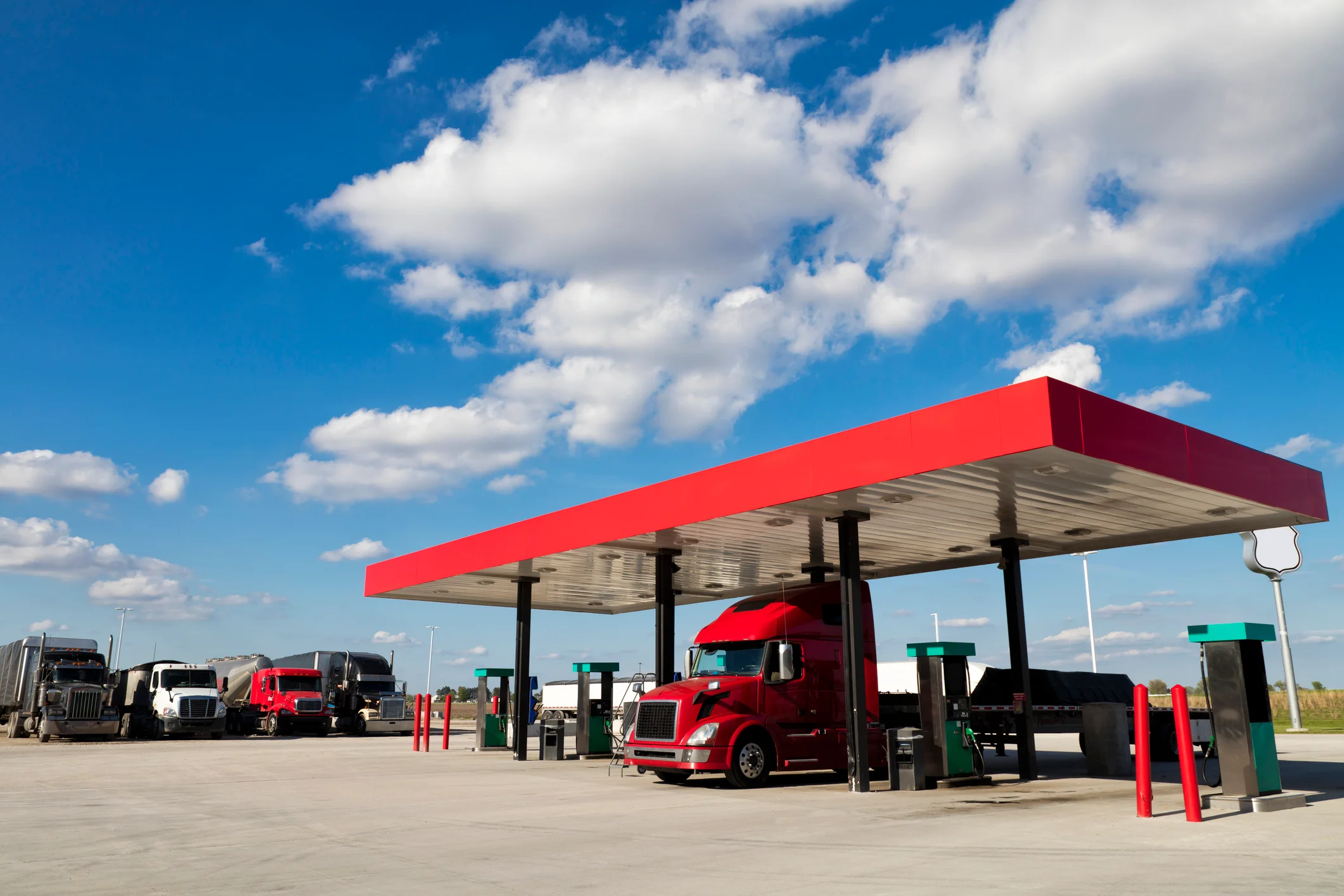
Diesel prices in the United States have risen sharply following the recent escalation involving Iran and the disruption of tanker traffic through the Strait of Hormuz. Ten days ago, diesel averaged $3.71 per gallon nationally. Today the national average sits near $4.60 per gallon—an increase of $0.89 per gallon.
For trucking operators, this type of price movement translates directly into operating costs. An owner-operator driving 100,000 miles per year at an average fuel economy of 6 miles per gallon now faces roughly $14,800 in additional annual fuel costs per truck.
This article explains:
why diesel prices are rising following the Iran conflict,
how higher diesel costs affect trucking operations and freight markets,
what the situation means for trucking insurance risk and renewals,
what trucking operators should monitor now.
Conditions remain fluid, and the goal here is not geopolitical commentary. Instead, this analysis focuses on how energy market disruptions translate into operational risk for the trucking industry—the sector that moves the American economy and, when it comes under sustained financial pressure, also moves the needle on commercial auto claims frequency and severity.
Why Diesel Prices Are Rising
The current diesel price increase is closely tied to the disruption of shipping routes through the Strait of Hormuz, one of the most critical energy chokepoints in the global oil market.
Under normal conditions, the strait handles roughly 20% of global oil supply, making it one of the most strategically important maritime routes in the world. When tanker traffic becomes uncertain or restricted, global energy markets react quickly.
In recent weeks:
Crude oil rose from around $63 per barrel to above $100,
Diesel prices increased more rapidly than gasoline prices,
Fuel markets began pricing in supply disruption risks.
Energy analysts note that diesel often reacts more aggressively than gasoline during supply shocks because diesel markets are more globally integrated and highly dependent on shipping routes.
Another contributing factor is seasonal demand. The unusually cold winter of early 2026 increased demand for heating oil—a product refined from the same distillation stream as diesel—leaving inventories lower than normal when the disruption occurred.
Diesel Price Impact on Trucking Operations
For trucking companies, fuel is one of the largest operating expenses. Even small changes in diesel prices can have significant financial consequences.
Current cost impact:
Metric | Value |
Pre-conflict diesel price | $3.71 per gallon |
Current national average | $4.60 per gallon |
Increase | +$0.89 per gallon |
Annual impact per truck | +$14,800 |
Assumptions:
100,000 miles driven annually
6 miles per gallon average fuel economy
Earlier analyst projections suggested diesel prices would reach $4.25–$4.45, which would have added $9,000–$12,300 annually per truck. The speed of the market reaction pushed costs higher than those projections.
For fleets, the cumulative impact grows quickly. A 20-truck fleet now faces approximately $300,000 in additional annual fuel costs at current prices.
Fuel Surcharges and Why Some Fleets Are More Exposed
The impact of diesel price increases is not uniform across the trucking industry. A key variable is whether a carrier’s contracts include indexed fuel surcharge (FSC) provisions.
Fuel surcharge clauses tied to an external benchmark—typically the U.S. Department of Energy (DOE) weekly retail diesel price—allow carriers to pass a portion of fuel cost increases to shippers.
Fleets operating under:
fixed-rate broker contracts,
spot market loads,
or non-indexed surcharge structures
often absorb the full increase directly in their operating margins.
Fuel surcharge structure can also serve as an indicator of how well a fleet can absorb fuel volatility. Carriers without indexed FSC provisions may face greater financial pressure during sustained fuel spikes, which can influence operational decision-making.
Freight Markets and the Two-Phase Response
Energy-driven supply chain disruptions often produce a two-phase response in freight markets.
Phase One: Short-Term Freight Tightening
Import disruptions and inventory repositioning increase domestic freight demand temporarily. Shippers accelerate shipments, build inventory buffers, and shift supply chains where possible.
During this phase:
spot rates often firm,
freight demand increases,
carrier costs rise simultaneously.
Phase Two: Demand Contraction
If high fuel prices persist long enough to reduce consumer spending, freight demand eventually contracts. Carriers that expanded capacity or took on debt during the first phase may face:
higher operating costs,
declining freight volumes,
tightening margins.
Historically, this second phase has been associated with increased operational risk across trucking fleets.
How Higher Fuel Costs Affect Trucking Risk Profiles
When operating margins compress rapidly, certain operational behaviors tend to emerge in the trucking industry. These patterns are closely monitored by insurers and regulators.
Maintenance Deferral
Brake systems, tires, and suspension components are among the mechanical systems most closely linked to commercial truck accident frequency.
Extending service intervals may protect short-term cash flow but often becomes visible in post-accident maintenance records, which are routinely examined during litigation.
Hours-of-Service Pressure
Lower margin per load can create pressure to increase load volume. This often leads to higher risk of hours-of-service violations, which are frequently scrutinized in accident investigations.
Hiring and Retention Pressure
Financial stress can compress driver screening and hiring standards. The effects may appear later in accident frequency data as driver turnover increases.
These operational decisions made during periods of financial pressure often affect loss experience months or years later.
What This Means for Trucking Insurance
The commercial auto insurance market has already been under pressure for several years. The industry combined ratio exceeded 107 in 2024, meaning insurers paid out more in claims and expenses than they collected in premiums.
Fuel shocks do not create new insurance risks—they amplify existing ones. When fleets face sustained cost increases, several operational factors become especially important in maintaining safe and stable fleet operations, including:
maintenance practices,
compliance metrics,
driver screening standards,
financial resilience.
Practical Steps for Trucking Operators
Periods of diesel price volatility often require proactive operational management.
Key considerations include:
Review fuel surcharge agreements: Contracts should reference a recognized index such as the DOE weekly diesel price to ensure surcharges adjust with market conditions.
Maintain safety-critical maintenance schedules: The short-term savings from deferring a brake or tire service rarely offset the potential financial, legal, and human consequences of a serious accident. Courts and juries are attentive to maintenance records.
Monitor compliance metrics closely: CSA scores, hours-of-service (HOS) compliance, and driver qualification standards remain key indicators of fleet safety performance. Periods of financial pressure are historically when these scores drift.
Communicate with your insurance provider or agent early: Agents and insurers generally have more flexibility to address operational challenges before they appear in loss experience. Transparency at renewal is not a vulnerability—it is how coverage relationships stay functional under stress.
What Past Fuel Shocks Suggest
The trucking industry has experienced similar fuel shocks before.
Diesel reached $4.76 per gallon in 2008 during the global energy spike.
Prices exceeded $5.50 during the 2022 Ukraine conflict.
In both cases, fuel markets eventually stabilized. The carriers that navigated those periods most successfully generally maintained:
consistent maintenance programs,
strong regulatory compliance,
disciplined operational decision-making.
Treating financial pressure as a risk-management challenge rather than purely a cash-flow issue has historically helped fleets preserve long-term stability.
Looking Ahead
Rising diesel prices triggered by geopolitical disruptions represent a significant operational challenge for the trucking industry. While fuel costs are an immediate concern, the longer-term implications often emerge through operational decisions made under financial pressure.
The operators who navigated those periods in a position of relative strength shared a common characteristic: they treated financial pressure as a risk management problem, not just a cash flow problem. They kept maintenance current, managed compliance posture, and resisted the temptation to trade long-term operational integrity for short-term cost relief.
STAR Mutual Risk Retention Group specializes in commercial auto liability coverage for transportation operators. Our focus is supporting motor carriers and fleets with insurance structures aligned with the operational realities of the trucking industry.
This article is provided for informational purposes only and should not be construed as legal or business advice. Readers are encouraged to consult with qualified advisors regarding regulatory, operational, or insurance matters specific to their circumstances. Market conditions and fuel prices may change, and the information presented reflects the understanding available at the time of publication.
Diesel prices in the United States have risen sharply following the recent escalation involving Iran and the disruption of tanker traffic through the Strait of Hormuz. Ten days ago, diesel averaged $3.71 per gallon nationally. Today the national average sits near $4.60 per gallon—an increase of $0.89 per gallon.
For trucking operators, this type of price movement translates directly into operating costs. An owner-operator driving 100,000 miles per year at an average fuel economy of 6 miles per gallon now faces roughly $14,800 in additional annual fuel costs per truck.
This article explains:
why diesel prices are rising following the Iran conflict,
how higher diesel costs affect trucking operations and freight markets,
what the situation means for trucking insurance risk and renewals,
what trucking operators should monitor now.
Conditions remain fluid, and the goal here is not geopolitical commentary. Instead, this analysis focuses on how energy market disruptions translate into operational risk for the trucking industry—the sector that moves the American economy and, when it comes under sustained financial pressure, also moves the needle on commercial auto claims frequency and severity.
Why Diesel Prices Are Rising
The current diesel price increase is closely tied to the disruption of shipping routes through the Strait of Hormuz, one of the most critical energy chokepoints in the global oil market.
Under normal conditions, the strait handles roughly 20% of global oil supply, making it one of the most strategically important maritime routes in the world. When tanker traffic becomes uncertain or restricted, global energy markets react quickly.
In recent weeks:
Crude oil rose from around $63 per barrel to above $100,
Diesel prices increased more rapidly than gasoline prices,
Fuel markets began pricing in supply disruption risks.
Energy analysts note that diesel often reacts more aggressively than gasoline during supply shocks because diesel markets are more globally integrated and highly dependent on shipping routes.
Another contributing factor is seasonal demand. The unusually cold winter of early 2026 increased demand for heating oil—a product refined from the same distillation stream as diesel—leaving inventories lower than normal when the disruption occurred.
Diesel Price Impact on Trucking Operations
For trucking companies, fuel is one of the largest operating expenses. Even small changes in diesel prices can have significant financial consequences.
Current cost impact:
Metric | Value |
Pre-conflict diesel price | $3.71 per gallon |
Current national average | $4.60 per gallon |
Increase | +$0.89 per gallon |
Annual impact per truck | +$14,800 |
Assumptions:
100,000 miles driven annually
6 miles per gallon average fuel economy
Earlier analyst projections suggested diesel prices would reach $4.25–$4.45, which would have added $9,000–$12,300 annually per truck. The speed of the market reaction pushed costs higher than those projections.
For fleets, the cumulative impact grows quickly. A 20-truck fleet now faces approximately $300,000 in additional annual fuel costs at current prices.
Fuel Surcharges and Why Some Fleets Are More Exposed
The impact of diesel price increases is not uniform across the trucking industry. A key variable is whether a carrier’s contracts include indexed fuel surcharge (FSC) provisions.
Fuel surcharge clauses tied to an external benchmark—typically the U.S. Department of Energy (DOE) weekly retail diesel price—allow carriers to pass a portion of fuel cost increases to shippers.
Fleets operating under:
fixed-rate broker contracts,
spot market loads,
or non-indexed surcharge structures
often absorb the full increase directly in their operating margins.
Fuel surcharge structure can also serve as an indicator of how well a fleet can absorb fuel volatility. Carriers without indexed FSC provisions may face greater financial pressure during sustained fuel spikes, which can influence operational decision-making.
Freight Markets and the Two-Phase Response
Energy-driven supply chain disruptions often produce a two-phase response in freight markets.
Phase One: Short-Term Freight Tightening
Import disruptions and inventory repositioning increase domestic freight demand temporarily. Shippers accelerate shipments, build inventory buffers, and shift supply chains where possible.
During this phase:
spot rates often firm,
freight demand increases,
carrier costs rise simultaneously.
Phase Two: Demand Contraction
If high fuel prices persist long enough to reduce consumer spending, freight demand eventually contracts. Carriers that expanded capacity or took on debt during the first phase may face:
higher operating costs,
declining freight volumes,
tightening margins.
Historically, this second phase has been associated with increased operational risk across trucking fleets.
How Higher Fuel Costs Affect Trucking Risk Profiles
When operating margins compress rapidly, certain operational behaviors tend to emerge in the trucking industry. These patterns are closely monitored by insurers and regulators.
Maintenance Deferral
Brake systems, tires, and suspension components are among the mechanical systems most closely linked to commercial truck accident frequency.
Extending service intervals may protect short-term cash flow but often becomes visible in post-accident maintenance records, which are routinely examined during litigation.
Hours-of-Service Pressure
Lower margin per load can create pressure to increase load volume. This often leads to higher risk of hours-of-service violations, which are frequently scrutinized in accident investigations.
Hiring and Retention Pressure
Financial stress can compress driver screening and hiring standards. The effects may appear later in accident frequency data as driver turnover increases.
These operational decisions made during periods of financial pressure often affect loss experience months or years later.
What This Means for Trucking Insurance
The commercial auto insurance market has already been under pressure for several years. The industry combined ratio exceeded 107 in 2024, meaning insurers paid out more in claims and expenses than they collected in premiums.
Fuel shocks do not create new insurance risks—they amplify existing ones. When fleets face sustained cost increases, several operational factors become especially important in maintaining safe and stable fleet operations, including:
maintenance practices,
compliance metrics,
driver screening standards,
financial resilience.
Practical Steps for Trucking Operators
Periods of diesel price volatility often require proactive operational management.
Key considerations include:
Review fuel surcharge agreements: Contracts should reference a recognized index such as the DOE weekly diesel price to ensure surcharges adjust with market conditions.
Maintain safety-critical maintenance schedules: The short-term savings from deferring a brake or tire service rarely offset the potential financial, legal, and human consequences of a serious accident. Courts and juries are attentive to maintenance records.
Monitor compliance metrics closely: CSA scores, hours-of-service (HOS) compliance, and driver qualification standards remain key indicators of fleet safety performance. Periods of financial pressure are historically when these scores drift.
Communicate with your insurance provider or agent early: Agents and insurers generally have more flexibility to address operational challenges before they appear in loss experience. Transparency at renewal is not a vulnerability—it is how coverage relationships stay functional under stress.
What Past Fuel Shocks Suggest
The trucking industry has experienced similar fuel shocks before.
Diesel reached $4.76 per gallon in 2008 during the global energy spike.
Prices exceeded $5.50 during the 2022 Ukraine conflict.
In both cases, fuel markets eventually stabilized. The carriers that navigated those periods most successfully generally maintained:
consistent maintenance programs,
strong regulatory compliance,
disciplined operational decision-making.
Treating financial pressure as a risk-management challenge rather than purely a cash-flow issue has historically helped fleets preserve long-term stability.
Looking Ahead
Rising diesel prices triggered by geopolitical disruptions represent a significant operational challenge for the trucking industry. While fuel costs are an immediate concern, the longer-term implications often emerge through operational decisions made under financial pressure.
The operators who navigated those periods in a position of relative strength shared a common characteristic: they treated financial pressure as a risk management problem, not just a cash flow problem. They kept maintenance current, managed compliance posture, and resisted the temptation to trade long-term operational integrity for short-term cost relief.
STAR Mutual Risk Retention Group specializes in commercial auto liability coverage for transportation operators. Our focus is supporting motor carriers and fleets with insurance structures aligned with the operational realities of the trucking industry.
This article is provided for informational purposes only and should not be construed as legal or business advice. Readers are encouraged to consult with qualified advisors regarding regulatory, operational, or insurance matters specific to their circumstances. Market conditions and fuel prices may change, and the information presented reflects the understanding available at the time of publication.
Contents
Stay up-to-date
Related Post


Aug 24, 2026
Become a STAR Agent
Become a STAR Agent
Get access to unparalleled technology-based service to quote and bind your clients in minutes.
Get appointed
Thousands of agents across the United States | Same-day quotes, ready to bind

STAR Mutual Risk Retention Group offers commercial auto liability insurance to the members of Reliable Transportation Association (“RTA”), looking for accessible and reliable coverage.
Contact
855-5MY-STAR (855-569-7827)
STAR Mutual RRG
PO Box 51414, Philadelphia
PA 19115
General inquiries:
Agent inquiries:
Claim inquiries:
The information presented on this website is for general informational purposes only and does not constitute legal, regulatory, or business advice. Readers are encouraged to consult with qualified legal or insurance professionals regarding questions specific to their circumstances.
The content is provided for general informational purposes only and does not constitute an offer to sell, or a solicitation of an offer to buy, insurance in any jurisdiction where STAR Mutual RRG is not licensed or registered. Any description of coverage is general and subject to the terms, conditions, and exclusions of the actual policy.
STAR Mutual Risk Retention Group offers commercial auto liability insurance to the members of Reliable Transportation Association (“RTA”), looking for accessible and reliable coverage.
Contact
855-5MY-STAR (855-569-7827)
STAR Mutual RRG
PO Box 51414, Philadelphia
PA 19115
General inquiries:
Agent inquiries:
Claim inquiries:
The information presented on this website is for general informational purposes only and does not constitute legal, regulatory, or business advice. Readers are encouraged to consult with qualified legal or insurance professionals regarding questions specific to their circumstances.
The content is provided for general informational purposes only and does not constitute an offer to sell, or a solicitation of an offer to buy, insurance in any jurisdiction where STAR Mutual RRG is not licensed or registered. Any description of coverage is general and subject to the terms, conditions, and exclusions of the actual policy.
STAR Mutual Risk Retention Group offers commercial auto liability insurance to the members of Reliable Transportation Association (“RTA”), looking for accessible and reliable coverage.
Contact
855-5MY-STAR (855-569-7827)
STAR Mutual RRG
PO Box 51414, Philadelphia
PA 19115
General inquiries:
Agent inquiries:
Claim inquiries:
The information presented on this website is for general informational purposes only and does not constitute legal, regulatory, or business advice. Readers are encouraged to consult with qualified legal or insurance professionals regarding questions specific to their circumstances.
The content is provided for general informational purposes only and does not constitute an offer to sell, or a solicitation of an offer to buy, insurance in any jurisdiction where STAR Mutual RRG is not licensed or registered. Any description of coverage is general and subject to the terms, conditions, and exclusions of the actual policy.
© 2026 - STAR Mutual RRG. All rights reserved.